


Wholesale Native American Jewelry for Boutiques
Table of Contents
- Understanding Wholesale Native American Jewelry for Boutiques
- Authentic Navajo, Zuni, and Hopi Craftsmanship: What Distinguishes Each Style
- Indian Arts and Crafts Act Compliance: Legal Requirements for Retailers
- Sourcing Authentic Handcrafted Sterling Silver and Turquoise Pieces
- Wholesale Pricing, Bulk Orders, and Margin Strategy for Retailers
- Native American Jewelry Hallmarks Guide: Verifying Authenticity and Provenance
- How to Clean Zuni Inlay Jewelry Safely for Resale and Display
- Inventory Management and Display for Boutique Success
Last Updated: August 24, 2026
Understanding Wholesale Native American Jewelry for Boutiques
Wholesale native american jewelry for boutiques represents a unique business opportunity connecting retailers with authentic handcrafted pieces from Navajo, Zuni, and Hopi artisans. At Turquoise Mustang, we've worked with boutique owners who recognize that sourcing genuine Indigenous-made jewelry requires understanding craftsmanship, legal compliance, and authenticity expectations.
The wholesale market has shifted dramatically over the past decade. Boutique owners now face a critical choice: compete on price with mass-produced imitations, or differentiate by offering genuine, handcrafted pieces that command premium margins. Retailers winning this competition understand the difference between authentic artisan work and "Native-inspired" pieces.
This guide covers sourcing, verifying, pricing, and maintaining wholesale native american jewelry inventory. We'll address legal requirements protecting both you and artisans, show you how to spot authentic craftsmanship, and provide practical strategies for managing inventory and display.
Authentic Navajo, Zuni, and Hopi Craftsmanship: What Distinguishes Each Style
Each Indigenous jewelry tradition brings distinct techniques, design languages, and stone preferences that affect pricing, customer appeal, and resale value.
Navajo silversmithing emphasizes bold, sculptural forms and heavy turquoise use. Navajo artisans excel at tufa cast techniques, carving designs into soft volcanic stone, then pouring molten silver into the mold. The result is organic, textured surfaces with deep stampwork. A Navajo cuff like the Number Eight Turquoise Tufa Cast Cuff by Roland Dixson showcases hand-carved tufa molds, hand-finished casting, and a single focal stone as the design centerpiece.

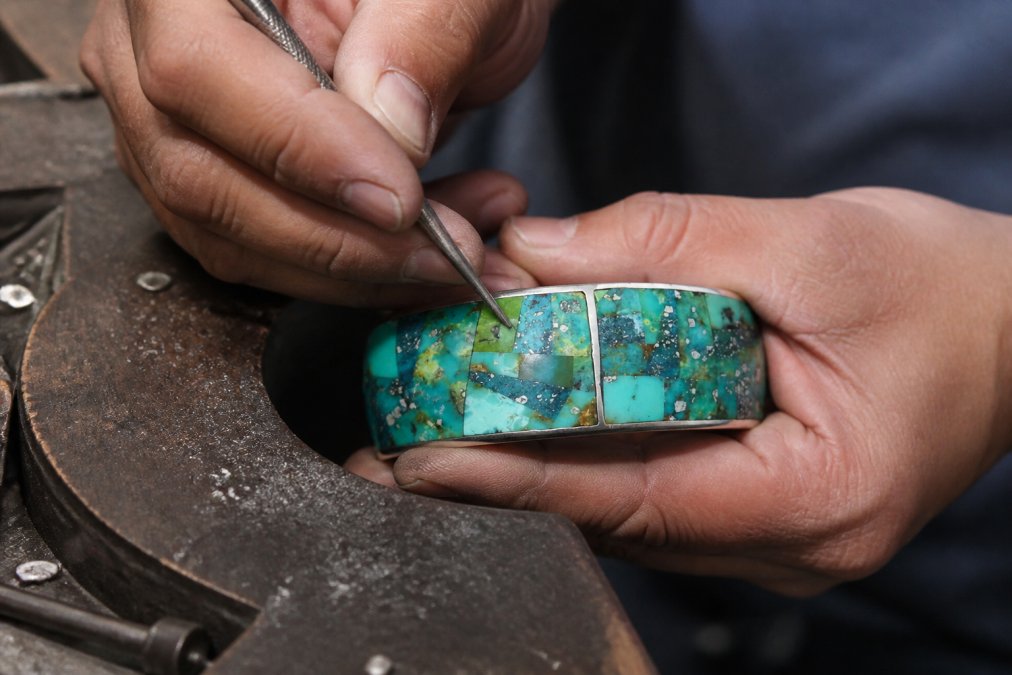
Zuni jewelry is recognized for intricate stone inlay work and cluster designs. Zuni artisans hand-cut individual stone fragments and set them flush into recessed silver channels. Where Navajo work tends toward sculptural minimalism, Zuni pieces often feature dozens of precisely fitted stones creating dense, colorful patterns. The Mixed Mine Turquoise Mosaic Inlay Cuff by GL Studio exemplifies this approach. Zuni work commands higher labor costs because of the time required for stone cutting and fitting.

Hopi jewelry traditionally emphasizes overlay technique, layering two sheets of silver and cutting designs through the top layer to reveal the silver beneath. Hopi work often incorporates geometric, katsina-inspired designs and uses less turquoise than Navajo or Zuni pieces.
For boutique owners, understanding these distinctions means you can educate customers on why a Zuni piece costs more than a Navajo cuff of similar size, the labor-intensive inlay process justifies higher wholesale pricing and stronger retail margins.
Indian Arts and Crafts Act Compliance: Legal Requirements for Retailers
The Indian Arts and Crafts Act is federal law applying directly to anyone selling Native American jewelry. Violating it carries penalties up to $20,000 per violation and potential criminal charges (doi.gov). The Department of Interior actively investigates misrepresentation.
The law prohibits marketing, labeling, or advertising jewelry as Indian-made, Native American-made, or created by a specific tribe unless the artisan is an enrolled member of a federally recognized Indian tribe (iacb.doi.gov). If you're purchasing wholesale native american jewelry for your boutique, you're responsible for verifying the artisan's tribal enrollment before you sell the piece.
Every piece you stock must come with documentation of the artisan's name, tribal affiliation, and enrollment status. Reputable wholesale suppliers provide this information as standard. If a supplier can't verify artisan identity, don't buy from them.
The law allows you to market jewelry as "inspired by" or "in the style of" Native American designs if the piece wasn't made by an enrolled tribal member. But the distinction must be clear and honest. Keep in mind that we also offer our own proprietary lines of Western jewelry. These are all sterling, made with a variety of authentic stones and clearly hallmarked to distinguish our products from Native made jewelry.
Retailers can access resources on compliance through the Indian Arts and Crafts Board. Documentation you should request from every wholesale supplier includes the artisan's name, tribal enrollment number, and specific tribe. Keep these records for at least three years.
Sourcing Authentic Handcrafted Sterling Silver and Turquoise Pieces
Finding reliable wholesale sources requires knowing what questions to ask and what documentation to expect.
Direct artisan relationships offer the highest authenticity and often the best margins. Many Navajo, Zuni, and Hopi artisans work directly with retailers, especially smaller boutiques. The advantage is clear communication about techniques, materials, and provenance. The challenge is volume and consistency.
Established wholesale suppliers maintain inventory and fulfill larger orders. When evaluating a supplier, ask for artisan names and tribal enrollment documentation for every piece, written confirmation that all jewelry is handcrafted by enrolled tribal members, turquoise sourcing information, and return and authentication policies.
Trading posts and cooperative galleries represent multiple artisans and often offer wholesale programs. These operations have curated artist relationships and can vouch for authenticity.
When evaluating a new wholesale source, order a small sample first. Examine the craftsmanship in person. Look for hand-stamped marks (never perfectly uniform), variations in stone color and placement, and evidence of hand-finishing. Mass-produced pieces show machine consistency that handcrafted work doesn't.
Turquoise sourcing matters to informed customers. High-end pieces often specify the mine, Number Eight, Sleeping Beauty, Kingman, Morenci. Ask your supplier if they know the stone source. This detail becomes part of your retail story and justifies premium pricing.
Wholesale Pricing, Bulk Orders, and Margin Strategy for Retailers
Wholesale native american jewelry pricing varies based on artisan reputation, technique complexity, and stone quality. Understanding pricing tiers helps you plan inventory and set retail prices that sustain your business.
Entry-level pieces, smaller cuffs, simple designs, less prominent turquoise, typically wholesale at lower price points. Mid-range pieces with more intricate work or larger turquoise stones occupy the middle tier. High-end artisan pieces command premium wholesale pricing.
For example, Turquoise Mustang's curated wholesale collection includes pieces like the White Buffalo Nine-Stone Cluster Cuff by Jimmie Yazzie. This pricing reflects the artisan's reputation, hand-stamped detailing, repoussé work, and stone quality. A boutique owner might retail this piece at a markup reflecting the artisan's fair compensation, the authenticity premium, and operational costs.

Bulk orders typically unlock better wholesale pricing. Many suppliers offer tiered discounts: single pieces at list price, orders of 5+ pieces at 10-15% discount, orders of 10+ at 20% discount. These discounts are modest compared to mass-market jewelry because handcrafted work has real production constraints.
Margin expectations differ from fast-fashion jewelry. Realistic margins on wholesale native american jewelry range from 100-150% of wholesale cost, depending on the price point and your market. Calculate your margins carefully, factoring in display and storage, insurance, cleaning supplies, staff education, and unsold inventory carrying costs.
Boutique owners who succeed with wholesale native american jewelry treat it as a specialty category, not a volume play. Your advantage is curation, authenticity, and customer education, not price competition.
Native American Jewelry Hallmarks Guide: Verifying Authenticity and Provenance
Hallmarks and maker's marks tell you whether a piece is genuine handcrafted work or mass-produced.
Sterling silver stamps appear on the back or inside of every authentic piece. Look for "925" or ".925" (indicating 92.5% silver content). Reputable artisans stamp their work clearly. If you see vague or worn stamps, or no stamp at all, that's a red flag.
Artisan signatures or maker's marks vary widely. Some artisans use their full name, others initials or a personal symbol. Ask your wholesale supplier what signature to expect from each artisan. Consistency across multiple pieces from the same maker is a good sign.
Turquoise treatments should be disclosed. Natural turquoise often shows matrix (darker veining). Treated turquoise has been stabilized or enhanced to improve color. High-quality untreated turquoise is rarer and commands higher prices. Your supplier should tell you the treatment status of stones in each piece.
Hand-finishing marks are your best authenticity indicator. Look at the back of a cuff or underside of a ring. Handcrafted pieces show slight variations in stamp depth and spacing, evidence of hand-filing and polishing, and asymmetries indicating individual craftsmanship. Mass-produced pieces show perfectly uniform stamping, machine-consistent polishing, and suspicious uniformity in stone placement.
When you receive a wholesale shipment, inspect 10-20% of pieces in detail. Check stamps, examine stone setting, and look for solder lines. Keep photographic records of authentic pieces from each artisan for comparison. Provenance documentation is your legal protection and retail advantage. Keep supplier invoices listing artisan names and tribal affiliations, and provide this information to customers in writing when you sell a piece.
How to Clean Zuni Inlay Jewelry Safely for Resale and Display
Zuni inlay jewelry requires specific care because densely packed stones and hand-set fragments are vulnerable to moisture damage and impact.
Never submerge Zuni inlay jewelry in water. Water can seep between stones and silver, causing corrosion and potentially loosening stone settings. Instead, use a soft, dry microfiber cloth for routine cleaning. For stubborn tarnish, use a silver polishing cloth designed for sterling silver with light pressure.
For deeper cleaning, use a slightly damp cloth with warm water and a drop of mild dish soap. Dampen the cloth, not the jewelry. Wipe quickly and dry immediately. Avoid commercial silver cleaning solutions for inlay work, as these can seep into gaps between stones and cause discoloration.
Display considerations affect how jewelry looks in your boutique. Store Zuni pieces in a low-humidity environment. Use silica gel packets in display cases if you're in a humid climate. Display pieces individually on velvet or suede to protect stones and show off inlay work. Avoid piling pieces together or storing them in plastic bags.
When customers try on inlay pieces, provide a soft cloth for them to hold rather than letting them handle the jewelry directly. Skin oils and moisture accelerate tarnishing. Regular maintenance between sales keeps pieces looking showroom-fresh and demonstrates care to buyers.
Inventory Management and Display for Boutique Success
How you organize and present wholesale native american jewelry directly affects sales velocity and customer perception.
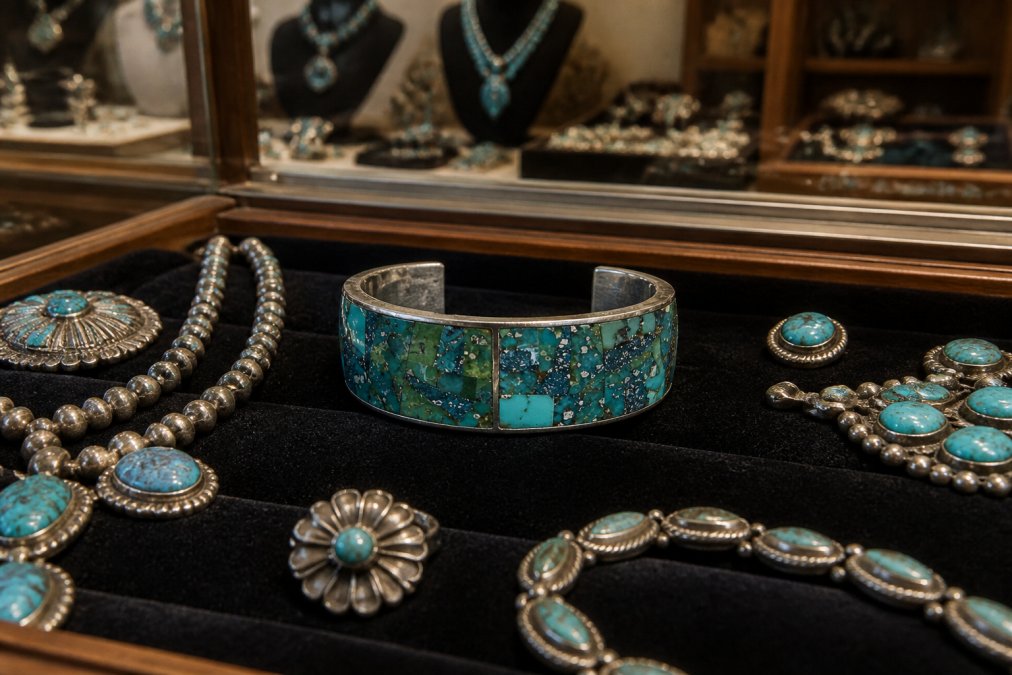
Inventory organization should balance accessibility with protection. Use a combination of display cases and back-stock. High-rotation pieces can be in display cases; rare or high-value pieces stay in secure storage until a customer expresses interest.
Track inventory by artisan, style, and stone type using a simple spreadsheet or inventory management tool. Record artisan name and tribal affiliation, wholesale cost and retail price, date acquired, and customer feedback. This data informs your next wholesale order.
Display strategy should educate and inspire. Create a narrative around the jewelry. Small placards can explain techniques or stone sources. Customers who understand craftsmanship are willing to pay premium prices. Arrange pieces by style, artisan, or price point. Group similar work together so customers can compare techniques and see the range within a category.
Lighting matters. Turquoise and silver require good light to show their best. Avoid harsh fluorescent lighting; warm LED lighting shows stone color and silver detail more effectively. Rotate pieces on display every 2-3 weeks to keep customers coming back and prevent fading.
Price signage should include the artisan's name and tribal affiliation. This reinforces authenticity and creates connection between customer and maker. Insurance and security matter for high-value inventory. Work with your insurance agent to ensure your policy covers handcrafted jewelry inventory. Consider security measures appropriate to your store.
Sourcing wholesale native american jewelry for boutiques requires commitment to authenticity, legal compliance, and customer education. Retailers succeeding in this space understand they're competing on curation, storytelling, and connecting customers with genuine artisan work. Turquoise Mustang's handcrafted collection demonstrates how curated sourcing, verified provenance, and detailed craftsmanship create pieces that sustain margins and build customer loyalty. When you stock pieces like the White Buffalo Seven-Stone Cluster Wide Cuff by Jimmy Yazzie, you're offering your customers access to authentic Indigenous artistry and supporting traditional craftsmanship. Start with a small, carefully sourced collection, educate your customers on the techniques and stories behind each piece, and let the quality of the work drive your business forward.
Frequently Asked Questions
How can I verify that wholesale Native American jewelry is actually handcrafted by Indigenous artisans?
Look for hallmarks and signatures from the artisan, request documentation of the maker's tribal enrollment, and ask for provenance details. The Indian Arts and Crafts Act requires sellers to clearly identify whether items are made by Indigenous artisans or non-Indigenous makers. Reputable wholesale suppliers like Turquoise Mustang provide artist names, tribal affiliations, and detailed craftsmanship descriptions for each piece. Ask for certificates of authenticity and the specific techniques used (tufa cast, inlay work) to confirm genuine handcrafted origin.
What wholesale pricing should I expect for authentic Navajo and Zuni jewelry?
Handcrafted sterling silver and turquoise pieces from Turquoise Mustang typically range from $1,050 to $2,300 wholesale depending on stone quality, technique complexity, and artisan reputation. Pieces using premium materials like White Buffalo or rare turquoise mines command higher prices. Bulk orders often qualify for tiered discounts. Work with suppliers who offer transparent pricing and explain the craftsmanship justifying the cost, artisan labor, authentic materials, and one-of-a-kind designs support sustainable pricing that reflects true value.
What is the Indian Arts and Crafts Act and why does it matter for my boutique?
The Indian Arts and Crafts Act prohibits misrepresenting products as Native American-made when they are not. As a retailer, you must verify that wholesale suppliers provide authentic Indigenous-made pieces and accurate labeling. Violations carry significant legal penalties. When sourcing wholesale jewelry, request proof of artisan identity and tribal affiliation. Turquoise Mustang's proprietary Western jewelry lines are clearly hallmarked to distinguish them from authentic Native-made pieces, ensuring your boutique stays compliant and trustworthy.
How do I clean Zuni inlay jewelry safely without damaging the stones or silver?
Use a soft, lint-free cloth and warm soapy water, avoid ultrasonic cleaners and harsh chemicals that can loosen inlay stones or damage turquoise. For stubborn dirt, gently brush with a soft toothbrush. Dry immediately with a soft cloth. Never soak inlay pieces for extended periods. For resale and display, regular gentle cleaning maintains luster and appeal. Store pieces in a dry environment to prevent silver tarnish and protect delicate inlay work. Educate customers on care to build confidence in quality and longevity.
This article was written using GrandRanker