


Caring for Heirloom Silver Turquoise Jewelry: A Complete Guide
Table of Contents
- Why Heirloom Silver Turquoise Jewelry Needs Special Care
- What You'll Need: Essential Cleaning Supplies
- Step-by-Step: How to Clean Silver and Turquoise Jewelry
- How to Clean Zuni Inlay Jewelry Safely
- Removing Tarnish from Sterling Silver Settings
- Best Practices for Storing Turquoise Jewelry
- Daily Wear Precautions for Your Turquoise Jewelry
- When to Seek Professional Help
- Frequently Asked Questions
Last Updated: September 8, 2026
Heirloom silver turquoise jewelry is a fragile marriage of two very different materials: a porous gemstone that absorbs whatever it touches and a soft metal that reacts to air and moisture. That combination means caring for heirloom silver turquoise jewelry requires a different approach than cleaning either material on its own. Heirloom pieces often survive decades, and the difference between preservation and damage comes down to how owners clean and store them.
The most important rule to understand: turquoise is a porous gemstone. It absorbs oils, lotions, and cleaning chemicals, which permanently alters its color. Sterling silver, by contrast, tarnishes through oxidation, a surface reaction that polishing can reverse. The Gemological Institute of America's turquoise care guidelines explains that the stone's porosity makes it especially vulnerable to damage from common jewelry cleaners. The best care routine treats each material appropriately without letting one method harm the other.
Why Heirloom Silver Turquoise Jewelry Needs Special Care
Heirloom pieces carry a double risk: they are often older, with thinner silver and more delicate turquoise, and they hold sentimental value that makes damage especially painful. A piece that has survived fifty years deserves better than a harsh chemical dip.
Understanding Turquoise Porosity
Turquoise is a secondary mineral formed when water percolates through copper-rich rock, leaving the stone riddled with microscopic spaces (geology.com). When worn, it absorbs skin oils, sunscreen, perfume, and soap residue, slowly shifting its color from sky blue toward green or dulling its surface.
Stabilized vs. Natural Turquoise
Not all turquoise behaves the same. Stabilized turquoise has been treated with resin under pressure to fill its pores, making it more durable. Natural turquoise remains highly porous and demands gentler handling. Many heirloom pieces contain natural stone. If unsure, treat every piece as natural turquoise and follow the gentlest possible methods.
What You'll Need: Essential Cleaning Supplies
Gather these supplies before you start, and skip anything abrasive:
- Soft, lint-free microfiber cloths
- A soft-bristled brush, such as a clean baby toothbrush
- Mild dish soap, free of dyes and fragrances
- Distilled water
- A dedicated sterling silver polishing cloth
- Cotton gloves for handling pieces during cleaning
Step-by-Step: How to Clean Silver and Turquoise Jewelry
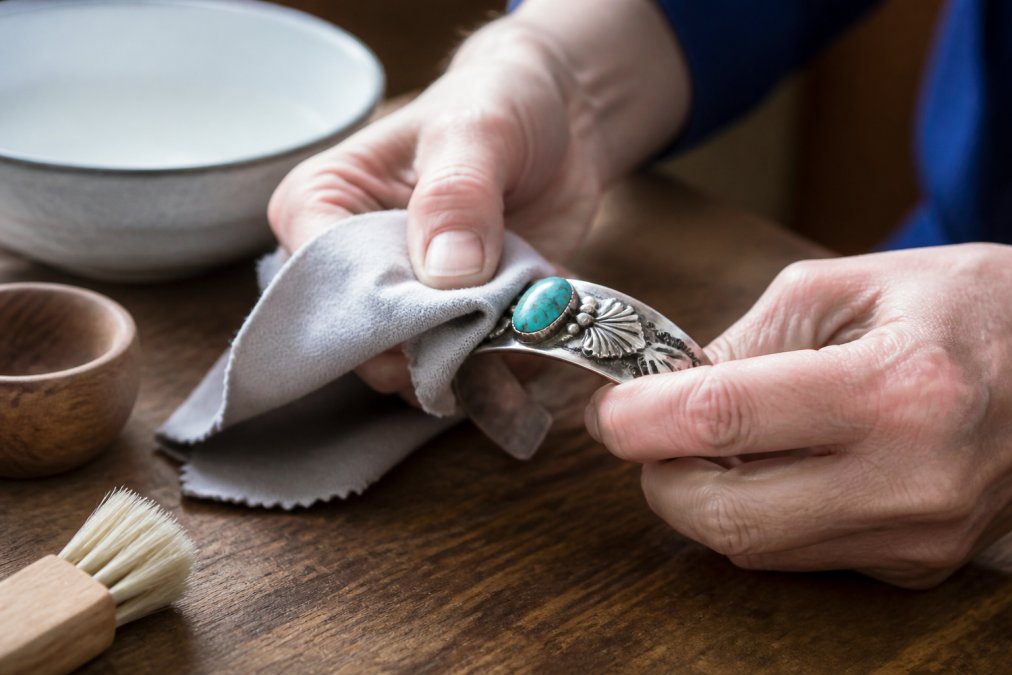
The safest cleaning method for caring for heirloom silver turquoise jewelry is dry first, then damp only if needed. Most pieces respond well to nothing more than a soft cloth, which removes the oils and dust that dull both the silver and the stone.
Gentle Cleaning Method
- Start dry. Use a soft microfiber cloth to wipe the entire piece, removing surface oils and dust. This alone handles most routine care.
- If grime remains, mix a few drops of mild dish soap into a bowl of distilled water.
- Dip your soft-bristled brush into the soapy water, then gently work it around the silver settings, not the turquoise.
- Rinse the brush in clean distilled water and lightly go over the silver to remove soap residue.
- Dry immediately with a fresh microfiber cloth, then let the piece air out completely before storing.
- Polish silver only with a dedicated silver polishing cloth, avoiding contact with the turquoise.
A common mistake is leaving soap residue on the piece. Soap dries into a film that dulls both silver and stone, so thorough rinsing and drying matter as much as the cleaning itself.
How to Clean Zuni Inlay Jewelry Safely
Zuni inlay jewelry combines multiple stones, turquoise, coral, jet, and shell, all set flush into a single silver piece. Each stone reacts differently to cleaners, so how to clean Zuni inlay jewelry safely comes down to one rule: never submerge it and never use liquid cleaners on the stone surfaces.
For Zuni pieces, use only the dry method: a soft cloth to wipe the surface and a dry soft-bristled brush to reach crevices between inlay stones. If the silver needs attention, polish carefully with a silver cloth, keeping it away from the inlay stones. Coral and shell are even softer and more porous than turquoise, so liquid of any kind risks permanent damage.
Removing Tarnish from Sterling Silver Settings
Tarnish on the silver setting is normal and reversible, but removing tarnish from sterling silver settings requires care when turquoise is present. The oxidation that darkens silver does not affect the turquoise, so you only need to treat the metal.
Use a quality silver polishing cloth, impregnated with a gentle polish. Rub the silver in straight lines, not circles, and stop before you reach the stone. Buff off any residue with a clean section of the cloth. For heavily tarnished antique pieces, consider leaving some patina in recessed areas: it adds depth and character collectors value.
Best Practices for Storing Turquoise Jewelry
Proper storage is the single most important factor in preserving an heirloom piece for the next generation. Most damage from improper storage is invisible at first, a slow dulling of the stone, a gradual loosening of a bezel, and only becomes apparent years later.
The Enemy: Humidity and Airborne Pollutants
Sterling silver tarnishes when it reacts with sulfur compounds in the air, a process accelerated by humidity. Turquoise, being porous, can absorb that same moisture, which over time can alter its color or weaken the stone's structure, especially in natural (unstabilized) pieces.
Building a Proper Storage Environment
Step 1: The Individual Pouch. Store each piece separately in its own soft pouch. This prevents adjacent jewelry from scratching the silver or chipping the turquoise. Use pouches made of untreated cotton or a soft, lint-free fabric. Avoid flannel that may have been treated with chemicals.
Step 2: The Anti-Tarnish Layer. Line your jewelry box or storage container with anti-tarnish fabric, impregnated with silver nanoparticles that neutralize sulfur gases before they can react with your jewelry. You can purchase this fabric by the yard from jewelry supply stores and line a wooden box yourself.
Step 3: The Acid-Free Barrier. For long-term storage, pieces you wear only a few times a year, wrap each piece in acid-free tissue paper before placing it in its pouch. Standard tissue paper is often acidic, and over years of contact, that acid can dull the polish on silver and potentially affect the turquoise's surface.
Step 4: The Desiccant. Place a small packet of silica gel inside your jewelry box or storage container to absorb ambient moisture. Replace the packet every few months, or when it changes color if you use indicating silica gel.
What to Avoid at All Costs
- Plastic Bags: Never store turquoise jewelry in plastic bags. They trap moisture, creating a humid environment that accelerates tarnish on silver and can cause the stone to sweat.
- Direct Sunlight: Ultraviolet light can fade the color of turquoise over time. Store pieces in a dark place, away from windows.
- Open Air: Leaving pieces on a dresser or in an open dish exposes them to dust, pollutants, and rapid changes in humidity.
- Other Jewelry: Never let pieces touch. A diamond or harder stone can scratch the surface of turquoise or sterling silver with just a slight shift in the box.
The Long-Term Inspection Routine
Once a year, take all stored pieces out and inspect them under good light. Look for new signs of tarnish, changes in the turquoise color, or loose settings. This annual check lets you catch a problem, like a loosening bezel, before it results in a lost stone.
Daily Wear Precautions for Your Turquoise Jewelry
Daily wear is where most damage occurs, often without the wearer noticing. Turquoise jewelry maintenance starts with habits that protect the stone before it ever meets a cleaner.
Remove turquoise jewelry before swimming, especially in chlorinated water, which can damage both stone and silver. The same applies to hot tubs, saunas, and steam rooms. Apply lotions, perfumes, and hair products before putting on your jewelry, and let them dry completely first. Cosmetic residue is one of the most common causes of turquoise discoloration.
When to Seek Professional Help
Knowing when to put the piece down and call a professional is the mark of a careful owner. While routine cleaning is a DIY task, certain conditions, especially on heirloom pieces, require the skill of a bench jeweler. Attempting a home repair on a loose bezel or cracked shank is the fastest way to turn a fixable issue into a permanent loss.
Loose Settings: The #1 Heirloom Risk
Heirloom pieces are often set in bezels, a thin rim of metal that wraps around the turquoise. Over decades of wear, that bezel can wear thin or stretch slightly, allowing the stone to move or rock.
The Test: Gently press on the turquoise with a soft cloth or your fingertip. If you feel any movement, stop wearing the piece immediately. A stone that rocks in its setting can chip its edges against the metal, and it can fall out entirely with a single accidental knock.
The Rule: Do Not Attempt a DIY Fix. You cannot tighten a bezel at home without specialized tools like a bezel rocker or a burnisher. Using pliers or other household tools will almost certainly scratch the silver, bend the bezel, or crack the stone.
What a Professional Can Do
A qualified jeweler can perform several critical repairs on heirloom pieces:
- Bezel Tightening: A jeweler uses a burnisher to carefully press the metal back against the stone, securing it without applying dangerous pressure to the turquoise.
- Prong Re-tipping: For pieces with prong settings, a jeweler can weld new metal onto worn prongs and rebuild them to securely hold the stone.
- Shank Repair: A thin or cracked band (shank) can be reinforced or replaced with matching sterling silver.
- Stone Replacement: If a stone is lost, a jeweler can source a replacement. However, matching the exact color and matrix of a natural, old turquoise stone is extremely difficult and expensive. This is why prevention is so critical.
Choosing the Right Professional
Not all jewelers are created equal. A mall jewelry store that primarily sells new pieces may not have a bench jeweler on staff with experience in antique restoration.
- Ask for Credentials: Look for a jeweler who is a Graduate Gemologist (G.G.) or a Certified Bench Jeweler™ through Jewelers of America. These credentials indicate advanced training in gemology and repair.
- Ask About Experience: Directly ask, "How often do you work on antique or heirloom turquoise pieces?" A jeweler who handles vintage Native American jewelry regularly will understand the delicacy of natural turquoise and the value of preserving original patina.
- Get a Second Opinion: For a particularly valuable or sentimental piece, do not hesitate to get a second opinion on the recommended repair. A good jeweler will welcome this.
The Professional Inspection Schedule
For heirloom pieces worn regularly, schedule a professional inspection every two to three years. The jeweler will check the integrity of all settings, assess the silver's condition, and clean the piece professionally using methods safe for turquoise.
| Problem | DIY Fix | When to See a Jeweler |
|---|---|---|
| Surface dust and oils | Soft microfiber cloth | Never needed |
| Light tarnish on silver | Silver polishing cloth | Heavy tarnish or worn details |
| Dull turquoise | Dry cloth only | Discoloration or surface damage |
| Loose stone or prong | Do not attempt | Immediately |
| Cracked bezel or setting | Do not wear the piece | Immediately |
| Thin or cracked shank | Do not wear the piece | Immediately |
| Worn or illegible hallmark | Do not attempt | For appraisal and documentation |
Frequently Asked Questions
How do you remove tarnish from silver without damaging turquoise?
The safest method is to use a polishing cloth designed for silver on the metal parts only, avoiding the turquoise stones. For a deeper clean, dip a cotton swab in a gentle silver cleaner and carefully apply it to the silver setting, then immediately buff with a clean, dry cloth. Never immerse the entire piece in a silver dip, as the chemicals can damage the porous turquoise. For heavy tarnish on heirloom pieces, professional cleaning is the safest option.
Is it safe to use ultrasonic cleaners on turquoise jewelry?
No, ultrasonic cleaners are not safe for turquoise jewelry. Turquoise is a porous gemstone, and the ultrasonic vibrations, combined with the cleaning solution, can cause serious damage. The process can force liquid into the stone's pores, leading to discoloration, and the vibrations can loosen stones from their settings or even crack them. Stick to gentle, manual cleaning with a soft, dry cloth or a mild soap solution to preserve your heirloom pieces.
Why does turquoise change color over time?
Turquoise can change color due to its porous nature. Natural, untreated turquoise absorbs oils from your skin, as well as cosmetics, lotions, and other substances. This absorption can cause the stone to darken or shift from a bright blue to a deeper green over many years. This process is natural and often considered to add character to the stone. However, to slow this change, remove your jewelry before applying lotions or perfumes and clean it regularly.
What is the best way to clean Zuni inlay jewelry safely?
Zuni inlay jewelry features delicate, precisely fitted stones, so gentle care is critical. Use a soft, dry microfiber cloth to gently wipe the surface after each wear. For a deeper cleaning, dip a soft-bristled brush, like a baby toothbrush, in a solution of lukewarm water and a drop of mild dish soap. Gently brush the piece, then pat it dry with a clean, soft cloth. Avoid soaking the piece and never use harsh chemicals or abrasive cleaners.