


Authentic Zuni Jewelry Online: Where to Shop
Table of Contents
- What Makes Authentic Zuni Jewelry Different
- How to Identify Authentic Native American Jewelry
- Native American Jewelry Hallmarks Guide
- Authentic Zuni Inlay Jewelry for Sale
- Featured Zuni Jewelry Collections
- Investment and Collectibility of Zuni Pieces
- Care and Maintenance of Inlay Jewelry
- Conclusion
Last Updated: August 26, 2026
What Makes Authentic Zuni Jewelry Different
Authentic zuni jewelry online represents some of the finest handcrafted artistry in the American Southwest. What separates genuine Zuni pieces from mass-produced imitations comes down to three core elements: the silversmith's technique, the quality of stone selection, and the precision of inlay work. Zuni artisans have perfected their craft over generations, creating pieces that function as both wearable art and investment-grade collectibles.
The hallmark of authentic zuni jewelry online is the intricate inlay method. Rather than simply setting stones into silver, Zuni craftspeople cut and fit individual stones, turquoise, coral, jet, mother of pearl, into carefully grooved channels, creating seamless mosaics of color and pattern. This channel inlay technique demands extraordinary skill and patience. Each stone must fit perfectly; gaps or misalignments compromise both aesthetics and structural integrity.
The materials themselves tell a story. Turquoise from different mines carries distinct color profiles, some sky-blue, others green-tinged or shot through with brown matrix. Coral ranges from deep orange to pale pink. Jet offers deep black contrast. Mother of pearl adds iridescent shimmer. Authentic artisans select stones for their individual character, not interchangeability. This is what elevates a Zuni piece from jewelry to heirloom.
How to Identify Authentic Native American Jewelry
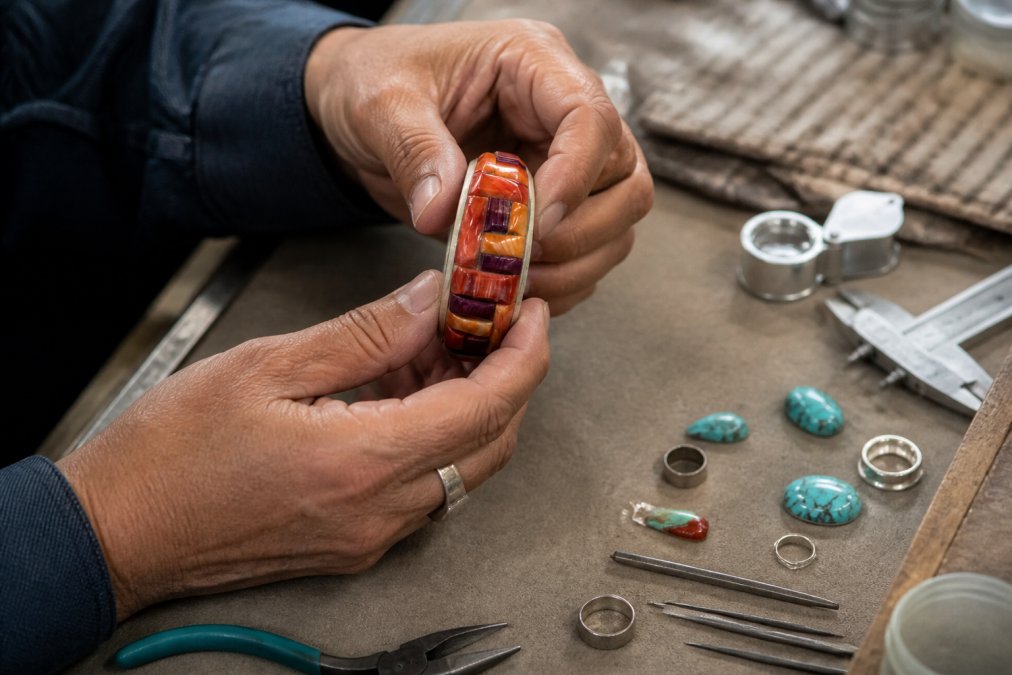
Distinguishing authentic Native American jewelry from reproductions requires understanding the craftsmanship markers that define genuine work. The first checkpoint is examining the stone setting itself, authentic inlay work shows no gaps between adjacent stones, no visible adhesive, and consistent depth throughout the design. The silversmith's hand is visible in subtle variations that mass production cannot replicate.
Examining Craftsmanship and Stone Setting
The quality of inlay work separates authentic zuni jewelry online from factory-made pieces. In genuine petite point or needlepoint styles, stones are cut to precise dimensions and fitted so tightly that no gap exists between pieces. The silversmith grinds and polishes each stone to match its neighbors perfectly. When you run your finger across the surface, you should feel a smooth transition from stone to stone with no ridges or dips.

Look at the back of the piece as well. Authentic Zuni work shows clean silversmithing on the reverse, no rough edges, no visible solder drips, no hastily finished areas. The artisan treats the back with the same care as the front because they understand that craftsmanship is complete work, not just the visible side.
Cluster work, another signature Zuni technique, involves grouping small stones around a central cabochon. In authentic cluster pieces, each small stone is individually set into the silver base, not glued onto a pre-formed backing. This means the piece can be repaired or cleaned without risk of stones falling loose.
Understanding Material Quality
Sterling silver must meet federal standards, 92.5% pure silver with 7.5% alloy metal for strength (the FTC). Authentic Native American jewelry uses genuine sterling, hallmarked accordingly. This matters not just for value but for longevity. Sterling silver develops a natural patina over time that many collectors appreciate; it tells the story of the piece's age and use.
The stones themselves vary dramatically in quality. High-grade turquoise is harder, more durable, and holds its color better than lower grades. Coral quality ranges from fragile material prone to cracking to dense, stable pieces that last centuries. Jet should be warm to the touch and relatively lightweight. Mother of pearl varies in thickness and iridescence. Authentic artisans source premium materials because inferior stones compromise the entire piece.
Dyed or treated stones are common in mass-produced jewelry. Genuine Zuni artisans work with natural stone colors, though some traditional stabilization of softer turquoise is acceptable and disclosed. If a stone's color seems unnaturally uniform or too vibrant, it's likely been artificially enhanced.
Native American Jewelry Hallmarks Guide
Understanding hallmarks is essential when shopping for authentic zuni jewelry online. A hallmark serves as the artisan's signature and proof of material authenticity. Federal law requires that sterling silver jewelry be marked with the .925 standard and the maker's mark or company hallmark (the FTC).
Sterling Silver Standards
All authentic sterling silver jewelry carries a hallmark indicating its purity. The most common marking is ".925" or "STERLING." Some older pieces use "STER" or similar abbreviations. The hallmark should be stamped clearly into the metal, not engraved or printed. This distinction matters, stamped marks are permanent; printed marks wear away.
The presence of a hallmark doesn't guarantee the piece is Zuni-made, but its absence is a red flag. If a seller claims a piece is authentic Native American jewelry but provides no hallmark or cannot explain the marking, question the authenticity.
Turquoise Mustang's collection includes pieces clearly hallmarked to distinguish our proprietary sterling lines from Native-made jewelry, ensuring transparency about the piece's origin and craftsmanship.
Artist Signatures and Pueblo Marks
Many Zuni artisans sign their work with initials or full names stamped into the silver. These signatures are valuable for collectors because they create traceability. A piece signed by a recognized Zuni master commands higher prices and holds value better than unsigned work.
Some pieces carry pueblo marks, symbols or abbreviations indicating the Zuni Pueblo or specific family workshops. These marks connect the piece to a specific tradition and lineage. Learning to recognize these signatures helps you understand the piece's provenance and the artisan's reputation.
Unsigned pieces are not automatically inauthentic, but they're harder to verify. Many older pieces were created before signing became standard practice. Contemporary unsigned work should come with documentation or a seller's guarantee of authenticity.
Authentic Zuni Inlay Jewelry for Sale
When shopping for authentic zuni jewelry online, understanding the different inlay styles helps you select pieces that match your aesthetic and investment goals. Each technique carries distinct characteristics and value propositions.
Petite Point and Needlepoint Styles
Petite point represents the most intricate and labor-intensive Zuni technique. Stones are cut into tiny, uniform shapes, often round or oval, and arranged in precise patterns. A single petite point bracelet might contain 50 to 100 individual stones, each cut and fitted by hand (si.edu). This labor intensity makes petite point pieces among the most expensive authentic zuni jewelry online, but also the most collectible.
Needlepoint is similar but uses slightly larger, more elongated stones arranged to create flowing, almost three-dimensional effects. The stones appear to stand up from the silver base, creating visual depth. Needlepoint work is technically easier than petite point but still demands extraordinary precision.
Both styles are signature Zuni techniques rarely replicated successfully by mass producers. The sheer time investment makes factory reproduction economically unfeasible. If you find petite point or needlepoint pieces at very low prices, authenticity is questionable.
Turquoise Mustang carries examples like the Earring, Coral Petite Point Squash blossoms, Tricia Leekity Zuni at $200.00, which showcases the artisan's mastery of stone selection and placement. The coral petite point technique requires cutting dozens of small coral pieces to precise dimensions, then fitting them into channels carved into the silver base.
Channel Inlay and Cluster Work
Channel inlay involves carving parallel grooves into silver and fitting stones into these channels to create linear patterns or geometric designs. This technique is less labor-intensive than petite point but still demands skilled hand work. Channel inlay pieces tend to be more affordable than petite point while maintaining authentic craftsmanship.
Cluster work groups multiple small stones around a central larger stone, creating a focal point. Zuni artisans excel at cluster designs that balance proportion and visual weight. Each cluster is individually crafted, making cluster pieces ideal for those seeking distinctive, one-of-a-kind designs.
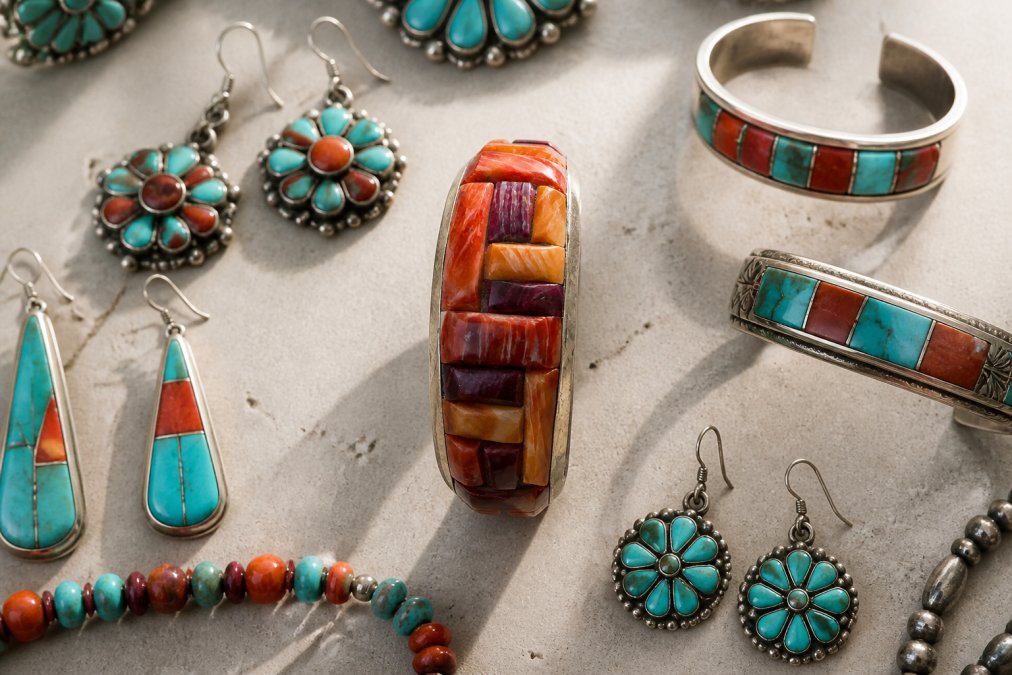
The Bracelet, Spiny Oyster Cobblestone Inlay Mozaic, Rickell & Glendora Booqa, Zuni at $594.00 demonstrates advanced mosaic inlay work, where multiple stone types, spiny oyster shell, turquoise, and other materials, are fitted together to create intricate, balanced patterns. This level of complexity commands higher prices because it represents hundreds of hours of artisan skill.

Featured Zuni Jewelry Collections
Building an authentic zuni jewelry online collection means understanding what styles serve different purposes and occasions. The right piece becomes part of your personal story.
Earrings: From Statement Pieces to Everyday Wear
Zuni earrings range from delicate, understated designs to dramatic statement pieces. Small petite point earrings with turquoise or coral work for everyday wear, adding subtle color and artistry to professional or casual outfits. Larger pieces with cluster work or bold channel inlay make powerful statements for special occasions.
The Earring, Hoops, Inlay Turquoise, Zuni at $225.00 offers versatility, the turquoise inlay adds visual interest while the hoop format works across multiple style contexts. For those seeking more delicate options, the Earring, very small petite point snowflake, 6-Stone. Unknown Zuni at $50.00 provides authentic craftsmanship at an accessible entry point.
Fringe-style earrings, like the Earring, Fringe style Coral Petite Point, Mildred Nelson Ukestine-Zuni at $300.00, create movement and visual drama. The fringe amplifies the petite point work, making the stone-setting technique the focal point.

Bracelets and Heirloom Pieces
Bracelets function as wearable art and investment pieces simultaneously. Wide cuff bracelets showcase inlay work across a larger canvas, allowing artisans to create complex designs. Narrower bracelets work for everyday wear while still delivering authentic craftsmanship.
The Bracelet, Spiny Oyster Cobblestone Inlay Mozaic, Rickell & Glendora Booqa, Zuni at $594.00 represents the heirloom category, a piece designed to be passed down. The complexity of the mosaic inlay, the quality of the sterling silver, and the artisan's reputation combine to create an investment that appreciates over time.
When selecting bracelets, consider your wrist size and daily activities. Delicate petite point bracelets are beautiful but require careful handling. Sturdy channel inlay or cluster work pieces tolerate more active wear. Authentic zuni jewelry online dealers should help you understand the durability characteristics of different styles.
Investment and Collectibility of Zuni Pieces
Authentic zuni jewelry online has emerged as a legitimate collectible category, with certain pieces appreciating significantly over time. Understanding what drives collectibility helps you make informed purchases.
Pieces by recognized Zuni master artisans command premium prices and hold value better than unsigned work. Collectors actively seek work by specific artists, creating demand that supports price appreciation. Established provenance, documented ownership history and authentication, increases value substantially.
Rarity matters. One-of-a-kind pieces created decades ago are more valuable than contemporary reproductions of classic designs. Limited production runs by respected artisans create scarcity that supports higher valuations.
Material quality directly impacts long-term value. High-grade turquoise, premium coral, and quality sterling silver ensure the piece will endure and maintain its visual appeal. Pieces made from inferior materials may deteriorate, reducing their desirability.
The condition of the piece affects its collectible value. Well-maintained pieces with minimal wear command higher prices than heavily worn examples. This is why proper care and maintenance matter, they're investments in the piece's future value.
Care and Maintenance of Inlay Jewelry
Protecting your authentic zuni jewelry online investment requires understanding how to clean and store these delicate pieces. Inlay jewelry demands more careful handling than solid metal jewelry because the stones can shift or loosen if subjected to impacts or pressure.
Store pieces individually in soft pouches or boxes with padding. Never stack inlay jewelry or store it loosely where pieces can rub against each other. Turquoise and coral are softer than many gemstones and can scratch easily. Jet and mother of pearl are similarly vulnerable to damage from friction.
Clean inlay jewelry with lukewarm water and mild soap, using a soft cloth to gently wipe the surface. Avoid ultrasonic cleaners or steam cleaning, which can damage the stones or loosen the inlay work. Do not immerse pieces in water for extended periods, as moisture can weaken the adhesive holding the stones.
Remove jewelry before swimming, showering, or engaging in physical activities. Chlorine, salt water, and sweat can damage turquoise and other porous stones. Cosmetics, perfumes, and lotions can also affect stone appearance and the silver patina.
Have pieces professionally inspected every few years, especially if you wear them regularly. A skilled jeweler can tighten any loose stones, re-polish the silver, and address minor damage before it becomes serious. This preventive maintenance preserves both the piece's beauty and its value.
Finding authentic zuni jewelry online requires understanding the craftsmanship markers that distinguish genuine artisan work from mass-produced imitations. Turquoise Mustang curates a selection of handcrafted pieces from recognized Zuni artisans, each hallmarked sterling silver with authentic stone inlay work. Whether you're building a collection or seeking a meaningful heirloom piece, focus on artisan reputation, material quality, and the visible evidence of hand craftsmanship. Start exploring our collection to discover pieces that resonate with your aesthetic and values.
| Inlay Style | Complexity | Price Range | Best For |
|---|---|---|---|
| Petite Point | Highest | $150-$500+ | Collectors seeking intricate detail |
| Needlepoint | High | $100-$400 | Those who appreciate dimensional effects |
| Channel Inlay | Medium | $75-$300 | Everyday wear with authentic artistry |
| Cluster Work | Medium | $75-$350 | Statement pieces with focal points |
Frequently Asked Questions
Q: Where can I find authentic Zuni handmade jewelry online?
A: Authentic Zuni jewelry is available through curated online retailers that specialize in Native American artisan work. Look for shops that provide artist names, pueblo affiliations, and hallmark documentation. Reputable sources display sterling silver stamps and include detailed information about each piece's creator. Avoid mass-market sites that sell generic 'Native-inspired' items without artist attribution or proper authentication.
Q: How can you tell if a Zuni necklace is real?
A: Authentic Zuni pieces feature precise, intricate stone setting with no gaps between inlaid stones. Examine the silver for hallmarks indicating sterling quality and artist signatures. Real Zuni work shows hand-finishing marks and consistent craftsmanship. Turquoise, coral, jet, and mother of pearl stones should be securely set and properly polished. Request documentation of the artisan's name and pueblo origin, which legitimate sellers provide for each piece.
Q: What are the key hallmarks to look for in authentic Zuni jewelry?
A: Authentic Zuni jewelry displays sterling silver stamps (usually .925) and artist signatures or pueblo marks. Look for precise channel inlay or petite point work with no sloppy stone setting. Each legitimate piece includes information about the silversmith and their pueblo. Hallmarks should be clear and professionally stamped, not faint or poorly applied. Reputable sellers provide certificates of authenticity and detailed artist information for heirloom-quality pieces.
Q: What's the difference between Zuni inlay and other Native American jewelry styles?
A: Zuni jewelry specializes in intricate lapidary work, particularly petite point and channel inlay techniques where small stones are precisely fitted together like mosaic. This differs from other pueblo styles that may use larger cabochon stones or simpler designs. Zuni artisans are known for exceptional stone grinding and polishing, creating seamless geometric patterns. The level of detail and precision in Zuni inlay work requires years of training in traditional silversmithing and lapidary craftsmanship.
This article was written using GrandRanker