


Where to Buy Authentic Native Jewelry: A 2026 Guide
Table of Contents
- Understanding Authentic Native American Jewelry
- How to Identify Real Turquoise Jewelry
- Navajo Jewelry Hallmarks Guide
- Where to Buy Authentic Zuni Inlay Jewelry for Sale
- Old Pawn vs. Contemporary Native Jewelry
- Verification and Certification Standards
- Care and Maintenance for Heirloom Pieces
- Conclusion
Last Updated: August 30, 2026
Understanding Authentic Native American Jewelry
When shopping for authentic native jewelry, the difference between genuine artisan work and mass-produced imitations matters legally and culturally. Authenticity isn't just about materials, it's about who made the piece, how they made it, and whether they belong to the tribal community their work represents.
At Turquoise Mustang, we offer a curated selection of pieces, learning that true authenticity requires understanding the maker's tribal affiliation, traditional techniques, and commitment to quality.
What Makes a Piece Truly Authentic
A truly authentic piece comes from an artisan who is a member of a federally recognized Native American tribe or creates work under direct tribal supervision. The piece should reflect traditional techniques, hand-stamping, stone-setting, silversmithing, rather than industrial shortcuts.
Authentic work carries the maker's personal signature or hallmark stamped directly into sterling silver. This is accountability. The craftsmanship shows in clean bezel settings, precise stone placement, and hand-worked textures that vary slightly from piece to piece because no two handmade pieces are identical. Authentic pieces use sterling silver (marked .925) and genuine turquoise or natural stones.
The Indian Arts and Crafts Act: What Buyers Need to Know
The Indian Arts and Crafts Act is federal law protecting Native American artisans and informed consumers. According to the Indian Arts and Crafts Act of 1990, it is illegal to offer or sell any art or craft product in a manner that falsely suggests it was created by a Native American artisan, or to market work as "Native American made" when it wasn't created by a member of a federally recognized tribe.
Violations carry penalties up to $250,000 and potential criminal prosecution (justice.gov). For buyers, this means any retailer claiming to sell authentic Native American jewelry should verify the artist's tribal affiliation. If they can't or won't, that's a red flag. When you purchase from a certified retailer or directly from an artist, you're protected by this law.
How to Identify Real Turquoise Jewelry
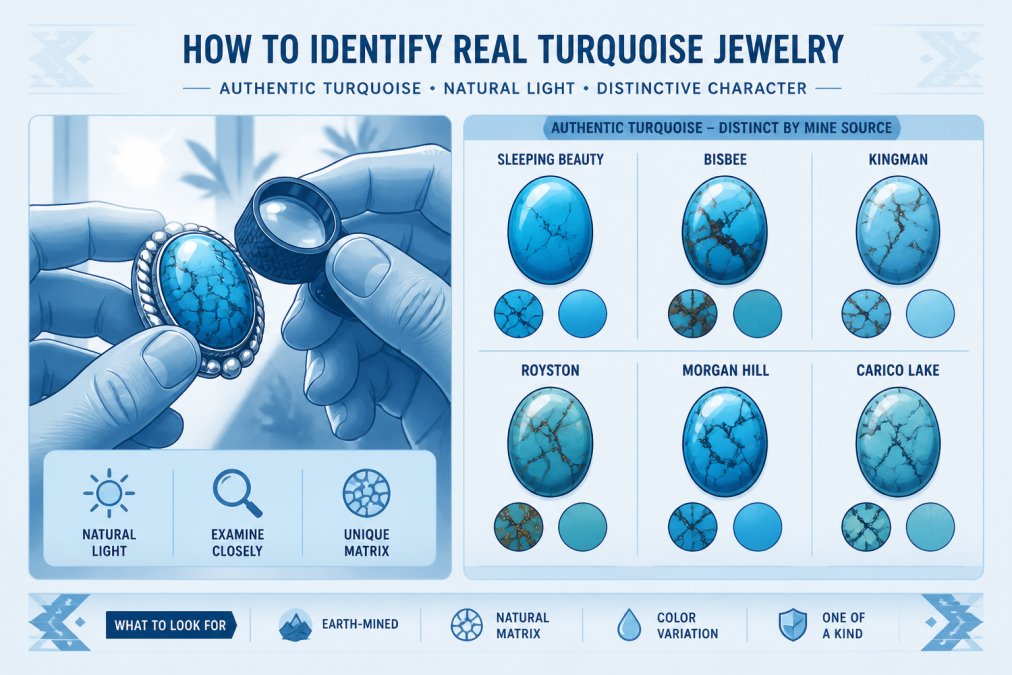
Turquoise quality varies dramatically. Real turquoise has character, color variations, natural matrix patterns, and visible signs of origin that synthetic or heavily treated stones cannot replicate.
Turquoise Quality and Mine Sources
Turquoise color depends on mineral composition. Copper creates blue tones; iron produces greens and yellows; zinc shifts color toward apple-green. The finest turquoise comes from specific mines, each with a distinctive signature. Sleeping Beauty turquoise from Arizona is bright and consistent blue with minimal matrix. Kingman turquoise displays the characteristic "birdseye" pattern and ranges from sky blue to deep green. Carico Lake turquoise from Nevada is prized for its vivid apple-green color.
When you see a piece with a specific mine name, that signals confidence in the material's origin. Generic "turquoise" without attribution often means the source is unknown or the stone is lower quality. The matrix, veining and speckled patterns, is natural character, not a flaw.
Spotting Stabilized and Treated Stones
Stabilized turquoise is genuine turquoise treated with resin to harden it and improve color consistency. It's acceptable but should be disclosed, as it costs significantly less than untreated material.
Howlite and other white stones are sometimes dyed to mimic turquoise. Dyed stones show unnaturally uniform color with no matrix variation. Real turquoise, even stabilized, has natural color variation and matrix character. Heat-treated turquoise has been warmed to deepen or shift color, but the treated color can fade over time with sunlight or moisture exposure.
To identify untreated, natural turquoise: look for color variation, visible matrix patterns, and slight irregularity in tone. Ask the seller directly about treatment history. A legitimate artisan or retailer will answer without hesitation.
Navajo Jewelry Hallmarks Guide
The hallmark stamped into sterling silver connects you directly to the artist. It's a promise that someone specific created this piece and stands behind it.
Reading Silversmith Stamps and Signatures
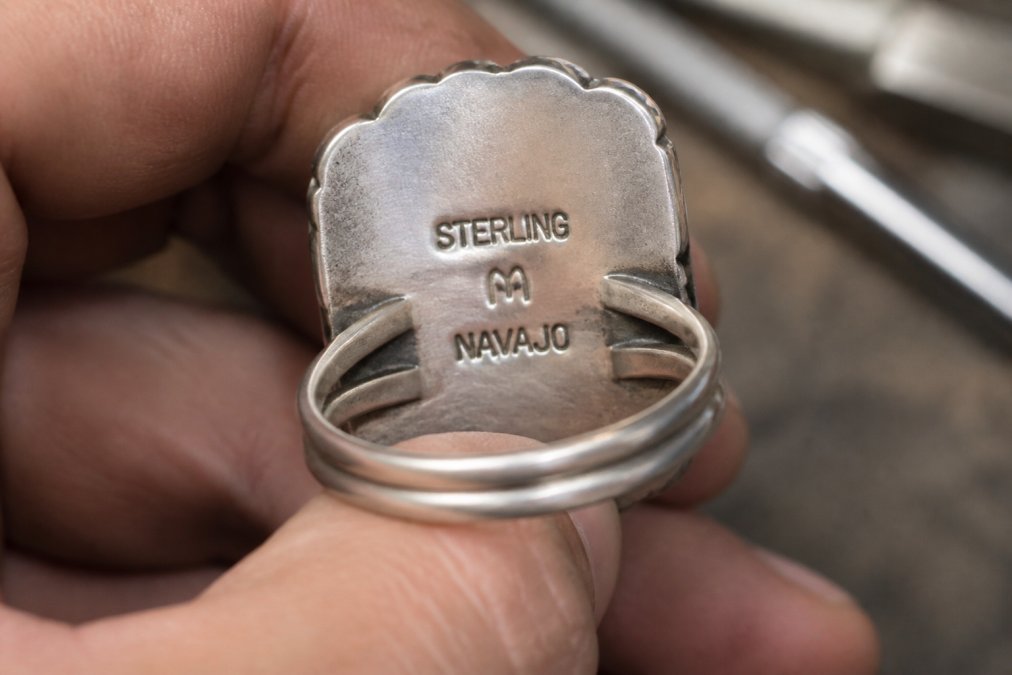
A Navajo silversmith's hallmark typically includes their initials or full name stamped into the silver, often with marks indicating tribal affiliation or studio. The hallmark appears on the back or interior, never the front. The depth and clarity of the stamp matters, professional silversmiths use precisely calibrated stamps creating clean, readable impressions. Shallow or poorly executed stamps suggest amateur work or reproduction.
Some artisans use pictographic marks, symbols representing their name or clan, instead of letters. These are equally valid and often more distinctive. If you see an unfamiliar pictographic mark, research it or ask the seller.
Sterling Silver Standards and Purity Marks
All authentic Native American jewelry uses sterling silver, marked .925, meaning 92.5% pure silver and 7.5% other metals (usually copper) (the FTC). This mark should appear near the hallmark. If you don't see it, ask where it is. Legitimate pieces always carry this mark.
Some artisans stamp "sterling" in addition to .925, or use abbreviations like "ster" or "stg." All are legitimate. What matters is that the mark is legible. Fake sterling often carries marks like .900 or .800, or no mark at all.
Where to Buy Authentic Zuni Inlay Jewelry for Sale
Finding genuine authentic zuni inlay jewelry for sale requires knowing where to look and what questions to ask. The marketplace ranges from direct artist sales to established galleries, each with different advantages.
Direct-from-Artist Sources and Tribal Markets
Buying directly from the artist is the gold standard. You meet the maker, see their workspace, understand their process, and verify tribal affiliation in person. Tribal markets bring together dozens of artisans where you can compare work and ask questions. You know exactly who made the piece and can ask about turquoise sources, techniques, and inspiration.
Established galleries and artisan cooperatives serve as vetted intermediaries with reputations to protect. A reputable gallery provides artist names, tribal affiliations, and material sourcing for every piece. They typically offer return policies and authenticity guarantees.
Turquoise Mustang operates as a curated retailer, working exclusively with Navajo and Zuni artisans whose work we've personally verified. Every piece exemplifies the level of craftsmanship we prioritize. We also offer our own proprietary lines of Western jewelry. These are all sterling, made with a variety of authentic stones and clearly hallmarked to distinguish our products from Native made jewelry.
Vetted Online Retailers and Galleries
Online retailers specializing in Native American jewelry face higher verification standards. The best provide detailed artist information, clear photography showing hallmarks, and transparent sourcing. They list turquoise mine sources, artist tribal affiliations, and often include maker biographies.
Look for retailers offering authenticity guarantees and clear return policies. If a site makes vague claims like "Native American inspired" without naming artisans or providing tribal verification, move on. Legitimate retailers are proud to name their artists and provide proof.
Ask retailers for documentation. Reputable sellers provide artist names, tribal affiliations, and often certificates of authenticity. Some offer appraisals or connections to jewelry experts who can verify the work. This documentation becomes part of your piece's provenance.
Old Pawn vs. Contemporary Native Jewelry
Old pawn jewelry, pieces from the early-to-mid 20th century that Native American families pawned and never redeemed, represents a specific collectible category. Understanding the differences helps you decide which aligns with your goals and budget.
Old pawn carries historical significance and often represents styles and techniques less common in contemporary work. A genuine old pawn piece from the 1930s or 1940s is a time capsule of that era's aesthetic. Turquoise may come from now-closed mines, making the material historically significant. The challenge is verification, the further back you go, the harder it is to confirm artist identity or tribal affiliation. Provenance becomes crucial.
Contemporary work offers different advantages. You know the artist and can research their current production. Contemporary artisans innovate, blending traditional techniques with modern design. A piece by a living artist carries value through the maker connection and supports their livelihood.
Many collectors own both. Old pawn pieces satisfy the collector's appetite for history and rarity. Contemporary pieces support living artisans and allow you to develop relationships with makers whose work resonates with you.
Verification and Certification Standards
Legitimate verification goes beyond a seller's word. It involves documentation, expert appraisal, and often third-party certification.
A certificate of authenticity from a reputable retailer or gallery is valuable only if the retailer itself has credibility. The certificate should include the artist's name and tribal affiliation, material descriptions (including turquoise mine source), creation date, and the retailer's contact information and credentials.
Professional jewelry appraisals provide independent verification. A certified gemologist can examine the piece, verify silver purity, identify turquoise source and treatment, and assess craftsmanship. They'll provide a written appraisal documenting findings and assigning replacement value for insurance.
High-quality photography showing the front, back, sides, and hallmark details allows thorough inspection before purchasing. Blurry photos or images hiding the hallmark are suspicious. Legitimate sellers provide clear, detailed photography as part of the verification process.
Ask sellers directly about verification practices. How do they document tribal affiliation? Can they provide references? Legitimate artisans and retailers welcome these questions and have transparent answers.
Care and Maintenance for Heirloom Pieces
Authentic Native American jewelry, especially pieces with natural turquoise, requires specific care to preserve beauty and value for generations.
Turquoise ranks 5-6 on the Mohs hardness scale, meaning it can scratch from harder materials or rough handling. Store turquoise jewelry separately from other pieces in a soft cloth pouch or lined jewelry box. Remove jewelry before showering, swimming, or exposing yourself to chlorine or salt water. Perfumes, lotions, and hair products also affect the stone's surface.
Cleaning requires a gentle touch. Use only lukewarm water and a soft cloth. Never use harsh chemicals, ultrasonic cleaners, or steam. For stubborn dirt, a tiny drop of mild dish soap in water is acceptable, but rinse thoroughly and dry immediately.
Sterling silver tarnishes naturally over time. Light tarnish is normal and part of the patina that gives older pieces character. If you want to maintain brightness, use a soft silver cloth designed for jewelry, rubbing gently in one direction. Never use abrasive materials on hand-stamped work, aggressive polishing can blur the artisan's detail work.
For valuable pieces, consider professional cleaning and inspection every few years. Store pieces in a cool, dry place away from direct sunlight. Keep documentation, certificates of authenticity, appraisals, and photographs, in a safe place separate from the jewelry itself.
Conclusion
Buying authentic native jewelry means understanding the intersection of craftsmanship, cultural heritage, legal protection, and investment value. The pieces that matter come from artisans whose names you can verify, whose tribal affiliations are documented, and whose work reflects generations of technique and tradition.
The marketplace rewards informed buyers. You'll find genuine pieces when you know what to look for: sterling silver hallmarks, natural turquoise with character, hand-stamped details that vary slightly from piece to piece, and sellers who provide transparent documentation of artist identity and material sourcing.
Turquoise Mustang's collection reflects this commitment to authenticity. Every piece comes directly from Navajo and Zuni artisans whose work we've personally verified. When you invest in pieces from our collection, you're supporting living artisans while acquiring work that will carry meaning across generations.
Start your collection with pieces you can verify, from sellers you can trust, and with materials you can document. Your investment in authentic work supports the continuation of traditional craftsmanship and gives you jewelry that carries real cultural significance and lasting beauty.
Frequently Asked Questions
Q: How can I tell if Native American jewelry is real?
A: Authentic native jewelry displays several key markers: hallmarks or artist signatures stamped in sterling silver, visible hand-stamping or beadwork that shows individual craftsmanship variation, and genuine turquoise with natural matrix patterns or color variations. Request documentation of the artisan's tribal affiliation and ask for the silversmith's name. Examine the weight and quality of the silver, authentic pieces feel substantial. Be wary of pieces with uniform, machine-like patterns or turquoise that feels plastic or unnaturally smooth, as these suggest imitation materials or mass production.
Q: What does the Indian Arts and Crafts Act mean for buyers?
A: The Indian Arts and Crafts Act (1990) prohibits misrepresenting items as Native American-made unless they are created by enrolled tribal members or Native artisans. This federal law protects both consumers and authentic artisans. When buying from established retailers, verify they comply by requesting proof of tribal affiliation or artist credentials. Reputable sellers will provide the artisan's name, tribal enrollment status, and sometimes a certificate of authenticity. This law gives buyers legal recourse if they purchase mislabeled pieces, making it a critical protection for discerning collectors.
Q: Why does authentic native jewelry cost more than similar-looking pieces?
A: Authentic native jewelry commands higher prices because each piece is handcrafted by a skilled artisan, often taking weeks or months to complete. Master silversmith techniques like hand-stamping, stone-cutting (lapidary work), and intricate beadwork require years of training. Genuine turquoise from specific mines, such as Carico Lake or Kingman, costs significantly more than stabilized or synthetic alternatives. You're also investing in cultural heritage, supporting traditional craftsmanship, and acquiring a collectible piece that holds or appreciates in value. Mass-produced imitations use cheaper materials, machine processes, and synthetic stones, which explains the dramatic price difference.
Q: Can I wear statement native jewelry pieces with modern, minimalist style?
A: Absolutely. Authentic native jewelry, particularly contemporary pieces, works beautifully in modern wardrobes when styled intentionally. A single turquoise ring or a subtle hand-stamped bracelet can anchor a minimalist outfit without overwhelming it. Contemporary artisans now create sleeker designs alongside traditional statement pieces, so you can find pieces that complement minimalist aesthetics. The key is choosing a single focal-point piece rather than layering multiple bold items. Turquoise's natural color palette, blues, greens, and earth tones, pairs well with neutral clothing. Consider starting with a smaller, refined piece like a ring or cuff to integrate native craftsmanship into your everyday style.
This article was written using GrandRanker