


Navajo Artisan Jewelry Wholesale Opportunities
Table of Contents
- What Navajo Artisan Jewelry Wholesale Offers Retailers
- Types of Authentic Navajo and Zuni Handcrafted Jewelry
- Indian Arts and Crafts Act Compliance for Wholesale Buyers
- How to Identify Navajo Jewelry Hallmarks and Authenticity
- Wholesale Turquoise Jewelry for Boutiques: Sourcing and Margins
- Direct-to-Artist vs. Trading Post Sourcing Models
- Minimum Orders, Lead Times, and Inventory Management
- Care and Maintenance Guidance for Retail Customers
Last Updated: August 29, 2026
What Navajo Artisan Jewelry Wholesale Offers Retailers
Retailers seeking authentic handcrafted pieces face a critical decision: where to source inventory that commands premium margins while maintaining genuine cultural integrity. Navajo artisan jewelry wholesale opportunities present a compelling business case for boutique owners, gift shops, and specialty retailers who want to differentiate from mass-produced alternatives.
Direct relationships with artisans or established wholesale suppliers eliminate middlemen, reduce per-unit costs significantly, and grant retailers exclusive designs unavailable through general distributors. At Turquoise Mustang, we've worked with retailers across the country who've built profitable jewelry departments by committing to authentic sourcing. The common thread: they understand that wholesale purchasing requires knowledge of authenticity markers, cultural compliance, and the specific characteristics that justify retail positioning.
Types of Authentic Navajo and Zuni Handcrafted Jewelry
Authentic Navajo and Zuni jewelry encompasses distinct stylistic traditions, each with recognizable techniques and cultural significance. Understanding these categories is essential for wholesale buyers because customers expect retailers to articulate the difference between styles.
Navajo Pearls and Traditional Silver Work
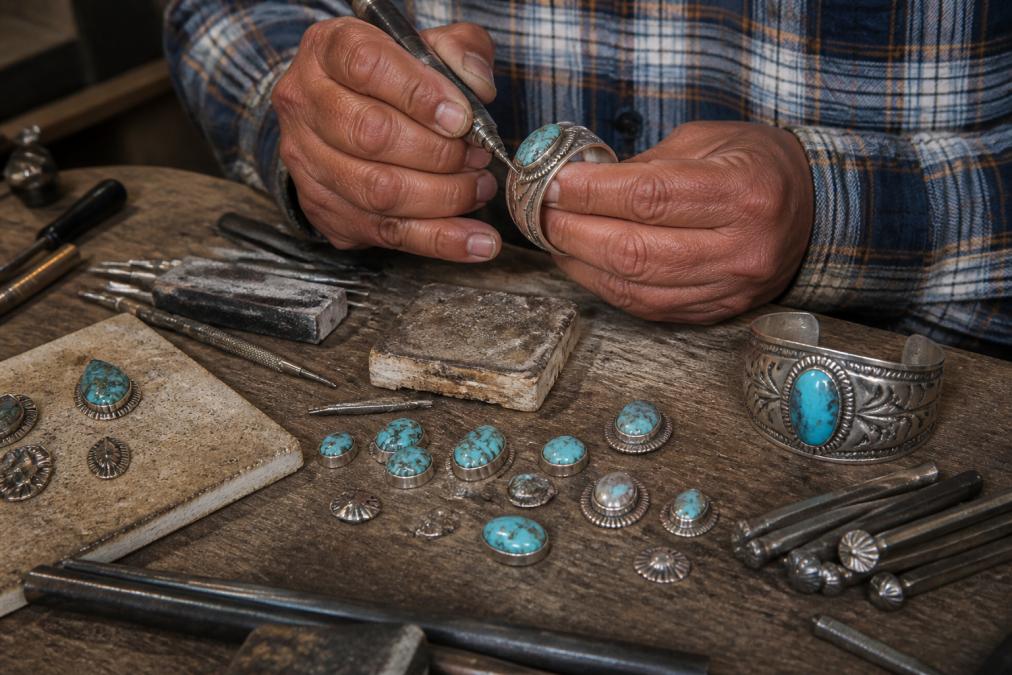
Navajo pearls represent one of the most recognizable forms of Navajo artisan jewelry wholesale. These hand-rolled, hand-stamped sterling silver beads range from tiny seed pearls to substantial barrel forms, often strung together in graduated patterns or combined with turquoise, coral, or shell. Each bead is individually shaped, smoothed, and stamped with traditional designs.
Traditional Navajo silver work extends to heavy cuff bracelets, concho belts, and squash blossom necklaces. The hallmark of authentic work is hand-stamping, where artisans use steel dies to create geometric patterns directly into the metal. Genuine pieces carry visible variations, no two are identical, and subtle irregularities indicate handwork rather than machine production.
For wholesale buyers, Navajo pearl strands command strong margins because production time justifies premium pricing. Retailers can position these pieces as investment-quality items that appreciate with age, particularly when accompanied by artist signatures or documentation.
Zuni Inlay and Hopi Overlay Techniques
Zuni inlay work distinguishes itself through meticulous stone-setting rather than surface stamping. Zuni artisans cut and fit turquoise, coral, shell, and other stones directly into recessed areas of sterling silver, creating intricate mosaic patterns. This technique requires extraordinary precision, and each stone piece must fit perfectly within its designated space.
Hopi overlay uses a two-layer silver technique where an upper layer is cut away to reveal a lower layer beneath, creating images through negative space. The process involves soldering and careful design work, often resulting in bold, graphic designs. Both techniques command higher wholesale prices than Navajo pearl work due to specialized skill required.
Horsehair Basket Jewelry and Woven Designs
Horsehair basket jewelry represents a distinct category within Navajo artisan jewelry wholesale. These pieces combine traditional Navajo basket-weaving techniques with sterling silver settings, creating pendants that showcase geometric woven patterns in tightly coiled horsehair.
The Man in the Maze design appears frequently in horsehair basket work, a sacred symbol representing life's journey and spiritual purpose. When Navajo artisans incorporate this design into basket jewelry, they bridge tribal traditions and create pieces with profound cultural meaning. Horsehair basket pendants typically range from 1 to 2.5 inches in diameter and are set in sterling silver bezels, with pieces commanding strong retail positioning for boutiques seeking statement work.
Indian Arts and Crafts Act Compliance for Wholesale Buyers
Federal law governs the marketing and sale of Native American jewelry. The Indian Arts and Crafts Act of 1990, enforced by the Department of the Interior, makes it illegal to offer, display, or sell any art or craft product in a manner that falsely suggests it is Indian-produced, Indian-made, or created by an Indian artisan if it was not.
For wholesale buyers, this law creates both a compliance obligation and a competitive advantage. You cannot legally market jewelry as "Navajo-made" unless it was actually created by a Navajo artisan. This restriction eliminates mass-produced "Navajo-inspired" jewelry and creates market space for retailers willing to stock authentic work.
Violations carry serious penalties (justice.gov). The statute allows for civil penalties up to $1,000 per violation, and criminal penalties of up to $250,000 and five years imprisonment for knowing violations. Retailers who misrepresent jewelry face lawsuits from tribal organizations and reputation damage.
Compliance requires documentation. When purchasing wholesale Navajo artisan jewelry, you should receive artist names, tribal affiliations, and ideally artist signatures on pieces. Reputable wholesale suppliers provide certificates of authenticity or artist statements with each purchase. This documentation protects you legally and gives retail customers confidence they're purchasing genuine work.
Turquoise Mustang maintains strict compliance with these requirements, working exclusively with documented Navajo and Zuni artisans and providing complete provenance documentation with every wholesale order.
How to Identify Navajo Jewelry Hallmarks and Authenticity
Identifying authentic Navajo artisan jewelry wholesale requires understanding hallmarking conventions and recognizing the physical characteristics of genuine handwork.
Hallmarks serve as the first authentication layer. Navajo artisans typically stamp their initials, full names, or tribal symbols directly into sterling silver. These hallmarks appear inside bracelets, on the backs of rings, or on pendant bezels. Genuine hallmarks are hand-stamped, showing slight variations in depth and angle, while machine-stamped marks appear uniform and perfect.
The hallmark should include "Sterling" or ".925" to indicate silver purity. Authentic Navajo work shows visible evidence of handcraftsmanship, hand-stamped designs contain subtle irregularities, lines that aren't perfectly straight, and stamps that vary slightly in depth. Machine-made pieces appear too perfect, with uniform stamping and identical surface finishes.
Turquoise quality provides another authentication clue. Authentic Navajo jewelry typically features genuine turquoise or other natural stones, not synthetic alternatives. Natural turquoise displays matrix patterns, color variation, and specific weight that plastic cannot replicate. The construction quality reveals handwork versus factory production, solder joints on authentic pieces show slight imperfections and variation, and bezels holding stones are individually fitted rather than mass-produced.
Wholesale Turquoise Jewelry for Boutiques: Sourcing and Margins
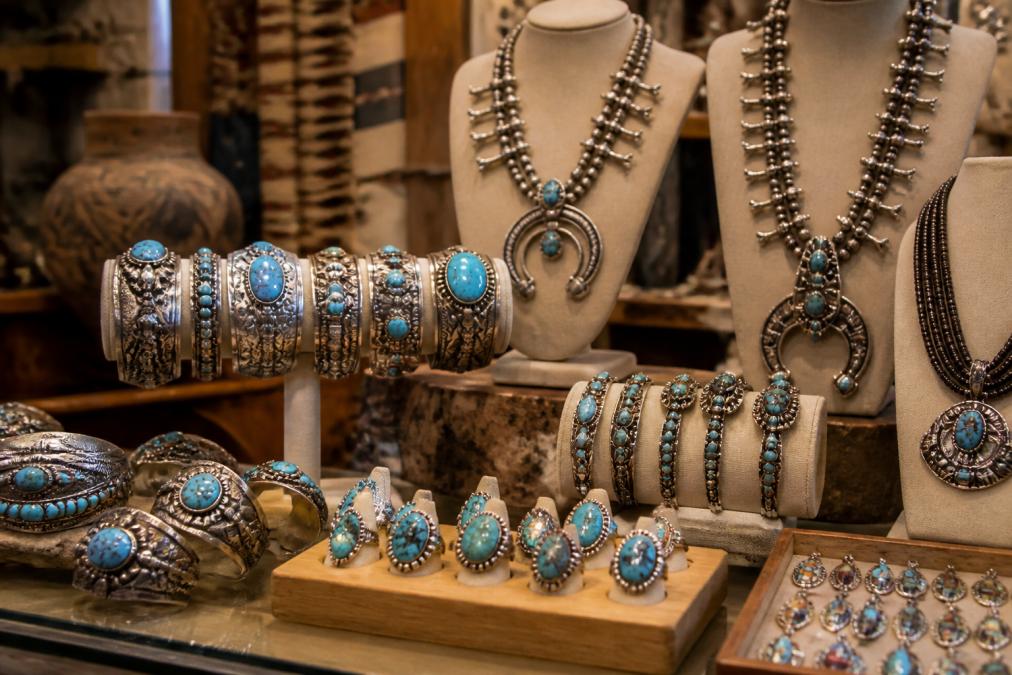
Sourcing wholesale turquoise jewelry requires understanding turquoise varieties, their market positioning, and how they affect retail margins. Turquoise quality varies dramatically, from common treated turquoise to rare natural stones.
Treated turquoise (stabilized or enhanced) represents the entry-level wholesale option. These stones have been chemically treated to improve durability and color consistency. Treated turquoise is affordable at wholesale, allowing retailers to offer attractive retail pricing while maintaining healthy margins. However, treated stones require disclosure to customers, as federal regulations require retailers to inform buyers about treatments (the FTC).
Natural untreated turquoise commands premium wholesale pricing. Stones like Sleeping Beauty, Kingman, or Carico Lake turquoise are sourced from specific mines and carry provenance that appeals to collectors. Carico Lake turquoise, with its distinctive apple-green color, represents the highest-tier option, with scarcity and visual distinctiveness justifying substantial retail markups.

Wholesale turquoise jewelry typically comes in three formats: finished pieces ready for retail sale, semi-finished components for custom assembly, or raw turquoise for jewelers who set stones themselves. Most boutique retailers work with finished pieces, which simplifies inventory management.
Direct-to-Artist vs. Trading Post Sourcing Models
Two primary wholesale sourcing models dominate the Navajo artisan jewelry market, each with distinct advantages and challenges for retail buyers.
Direct-to-artist sourcing means purchasing directly from individual Navajo or Zuni artisans, either through personal relationships or artist-run websites and studios. This model offers several advantages: you work with the creator directly, build relationships that can lead to exclusive designs, and eliminate middleman markups, resulting in better wholesale pricing. You also receive complete provenance documentation and can tell customers the artisan's story.
Direct sourcing carries challenges. Communication can be complicated if artisans are in remote areas with limited connectivity. You carry inventory risk entirely.
Trading post sourcing represents the alternative. Trading posts and cooperative galleries have curated collections from multiple artisans and handle inventory management themselves. They offer smaller minimum orders, faster fulfillment, and reduced inventory risk through consignment options.
Trading post sourcing reduces your operational complexity but increases costs. The trading post takes a markup for their curation and logistics work. This reduces your margins compared to direct sourcing, but the reduced risk and faster inventory turns often justify the cost. A hybrid approach works well for many boutique retailers: use trading posts for inventory testing and regular stock, then develop direct relationships with artisans whose work proves popular.
Minimum Orders, Lead Times, and Inventory Management
Navajo artisan jewelry wholesale operates on production timelines and batch economics that differ significantly from mass-produced fashion jewelry. Understanding these logistics is essential for retail planning.
Minimum order quantities vary by artisan and sourcing channel. Trading posts and wholesale distributors often accept orders as small as 1-3 pieces, though pricing per piece is higher for small quantities.
Lead times reflect handcrafted production. Pre-made inventory held by trading posts or distributors ships in 2-4 weeks. This extended lead time requires retailers to forecast demand carefully. You cannot react quickly to unexpected customer interest, and reordering takes months.
Inventory management strategies that work well include: starting with small orders from multiple artisans to identify customer preferences, using consignment arrangements with trading posts to test new designs with minimal capital outlay, maintaining a "core collection" of popular pieces with standing wholesale orders supplemented by rotating seasonal pieces, and tracking sell-through rates by piece, artisan, and price point to inform future purchasing.
Care and Maintenance Guidance for Retail Customers
Retailers who sell Navajo artisan jewelry wholesale should educate customers on proper care and maintenance. This guidance protects the customer's investment, reduces returns and complaints, and builds trust in your brand.
Sterling silver jewelry requires regular care to maintain appearance. Turquoise and other natural stones are porous and sensitive to chemicals, heat, and moisture. Provide customers with basic guidance: remove jewelry before swimming, showering, or applying lotions and cosmetics. Store pieces in a dry environment, preferably in soft cloth pouches rather than plastic bags, which trap moisture.
Cleaning sterling silver should use gentle methods. Mild soap and warm water work for most pieces. For tarnished silver, a soft-bristled silver brush or specialized silver cloth removes tarnish without damaging the metal or stones. Avoid harsh chemical cleaners that can damage turquoise or other stones.
Turquoise specifically requires careful handling. Natural turquoise is porous and can absorb oils from skin, lotions, and environmental exposure, causing color changes over time. Some color change is normal and doesn't indicate defect, it's part of the stone's character and history.
Horsehair basket jewelry requires particularly gentle care. The woven horsehair is delicate and can unravel if caught on clothing or subjected to rough handling. These pieces should be worn carefully and stored in protective pouches. Avoid exposing them to excessive moisture or direct sunlight.

Zuni inlay pieces demand attention to the stone-setting. The stones are set into recessed areas and held by the silver bezel. Rough handling or impact can loosen stones. Customers should avoid dropping inlay pieces or subjecting them to pressure that might dislodge stones.
Sourcing authentic Navajo artisan jewelry wholesale requires commitment to education, compliance, and relationship-building, but the opportunity to offer customers genuine handcrafted work with cultural significance and investment value justifies the effort. Retailers who understand authenticity markers, navigate the Indian Arts and Crafts Act requirements, and develop relationships with quality artisans or reputable trading posts can build profitable jewelry departments that differentiate their businesses. Turquoise Mustang provides wholesale access to authenticated Navajo and Zuni pieces, along with our proprietary sterling silver Western jewelry lines clearly hallmarked to distinguish our products from Native made jewelry. We provide complete provenance documentation and customer education support with every wholesale order. Get started with Turquoise Mustang wholesale and stock jewelry that commands premium margins while supporting authentic artisan craftsmanship.
Frequently Asked Questions
How do I verify that Navajo artisan jewelry is authentic before purchasing wholesale?
Authentic Navajo artisan jewelry must comply with the Indian Arts and Crafts Act, which requires clear identification of the artist and tribe. Look for hallmarks stamped into the sterling silver, genuine pieces display the artisan's signature or initials, the tribal affiliation (such as 'Navajo' or 'Zuni'), and sterling silver purity marks. Request documentation from your wholesale supplier proving artist credentials and tribal enrollment. Reputable wholesalers provide certificates of authenticity with each piece, including the artisan's name and background.
Is selling Navajo artisan jewelry profitable for a small boutique?
Yes, wholesale turquoise jewelry for boutiques can be profitable when sourced strategically. Authentic handcrafted pieces command higher retail margins than mass-produced alternatives because customers value heritage craftsmanship and one-of-a-kind designs. Success depends on selecting pieces that align with your customer base, managing inventory carefully to avoid overstock, and educating customers about authenticity and cultural significance, factors that justify premium pricing.
What is the difference between Navajo, Zuni, and Hopi jewelry styles?
Navajo jewelry emphasizes bold sterling silver work with large turquoise stones, often featuring stamped designs and traditional squash blossom necklaces. Zuni artisans specialize in intricate inlay work, setting small turquoise, coral, and shell pieces into precise geometric patterns on silver bases. Hopi overlay technique involves cutting designs into a silver sheet and soldering a contrasting layer underneath to create striking visual depth. Each style reflects distinct cultural traditions and technical expertise. Understanding these distinctions helps retailers stock pieces that appeal to collectors seeking specific artistic heritage.
What should I know about lead times and minimum order quantities when buying wholesale?
Lead times for handcrafted Navajo artisan jewelry typically range from 4-12 weeks, depending on design complexity and artisan availability. Minimum order quantities vary by supplier. Plan inventory needs accordingly and establish relationships with suppliers early to secure favorable terms. Discuss payment schedules and deposit requirements upfront. Building strong supplier relationships often results in flexibility on MOQs for repeat wholesale buyers.
This article was written using GrandRanker