


Handcrafted Native American Jewelry for Collectors
Table of Contents
- What Makes Handcrafted Native American Jewelry Collectible
- How to Identify Authentic Native American Jewelry
- Turquoise Types and Collector Value
- Best Heirloom Quality Turquoise Jewelry Brands and Artisans
- Native American Jewelry Hallmark Database and Verification
- Investment-Grade Pieces: Vintage vs. Contemporary
- Care and Maintenance for Silver and Stone
- Frequently Asked Questions
Last Updated: September 2, 2026
What Makes Handcrafted Native American Jewelry Collectible
Handcrafted native american jewelry for collectors represents far more than wearable art, it's a tangible record of cultural heritage, artistic mastery, and investment potential. What separates a piece worth collecting from mass-produced imitation comes down to three core factors: authenticity verification, material quality, and artist provenance.
The most valuable pieces share specific characteristics: sterling silver craftsmanship meeting strict standards, turquoise or natural stones with documented sourcing, and maker identity established through hallmarks or tribal affiliation. At Turquoise Mustang, we curate pieces that meet these collector standards, with documented artist attribution, verified material composition, and authentic tribal craftsmanship.
The investment case rests on scarcity. A Navajo silversmith's hand-stamped cuff cannot be mass-produced. The time investment alone, often 40-80 hours of labor per piece, creates natural scarcity. When combined with rare turquoise varieties or vintage provenance, collector-grade pieces appreciate over time rather than depreciate like fashion jewelry.
How to Identify Authentic Native American Jewelry
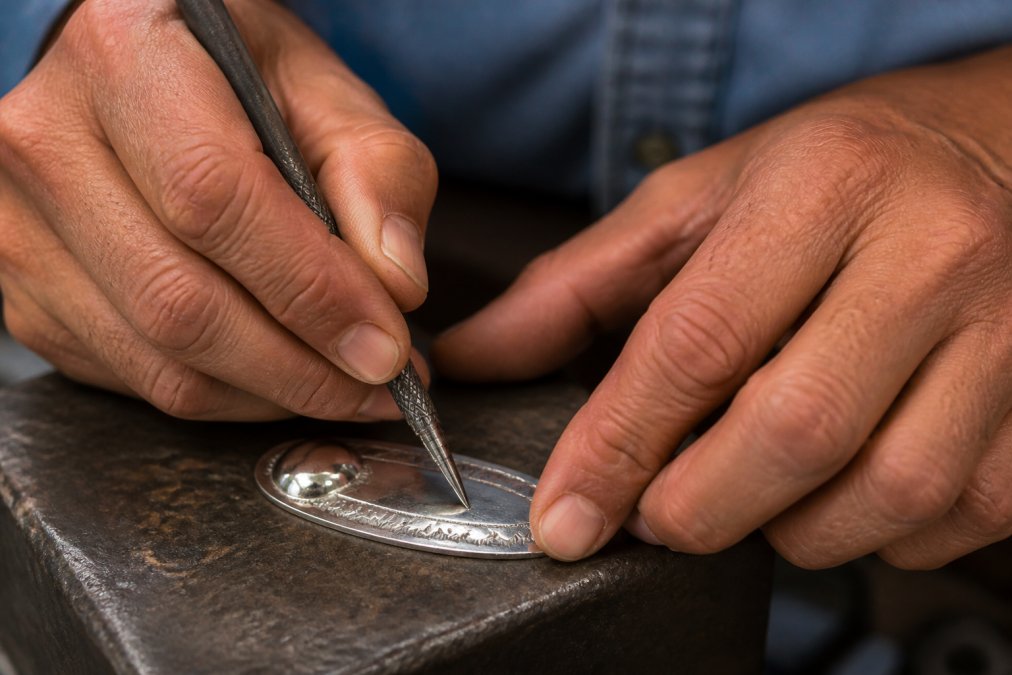
Authentic handcrafted native american jewelry displays specific technical markers that separate genuine pieces from reproductions. Sterling silver pieces carry substantial heft, hand-fabricated bezels show individual variation rather than factory uniformity, and stone settings demonstrate precise lapidary work.
Examine the reverse side of any piece. Authentic Navajo and Zuni work shows tool marks, oxidation patterns, and construction evidence reflecting hand-finishing. Mass-produced imitations display uniform machine marks or suspiciously perfect surfaces. The patina, the darkened oxidized layer on sterling silver, develops naturally over time and cannot be convincingly faked on new pieces.
Tufa cast pieces, created by carving designs into volcanic stone and pouring molten silver into the mold, display organic surface textures impossible to replicate in factory production. Stamped silver reveals individual hammer strikes that vary subtly across the surface.
The stone quality matters as much as the metalwork. Natural turquoise contains matrix and displays color variation. Treated or synthetic turquoise appears unnaturally uniform. High-quality pieces use cabochon-cut stones rather than raw or faceted cuts, with precise bezel settings showing no gaps between stone and silver.
Hallmark Verification and Artist Attribution
A hallmark is the maker's stamped signature, typically found on the reverse side of a piece. Authentic Navajo and Zuni artisans register their hallmarks with tribal authorities, creating a verifiable record of authorship. The hallmark system became standard practice in the 1970s, though many contemporary artisans use them and some vintage pieces predate the practice.
Hallmarks typically include the artist's initials or name, sometimes the tribal affiliation (N for Navajo, Z for Zuni), and occasionally a design element. Turquoise Mustang pieces come with documented artist attribution, so you know exactly which silversmith created each item, their tribal affiliation, and their body of work.
For pieces without hallmarks, documented provenance becomes critical. Vintage work from the 1950s-1960s often lacks hallmarks because the practice wasn't yet universal. The Hallmark Database maintained by tribal arts organizations provides searchable records of registered makers.
When evaluating attribution claims, verify the artist's actual name against registry records. Authentic pieces come with the maker's actual name, not generic tribal references.
Sterling Silver Craftsmanship Standards
Sterling silver must contain 92.5% pure silver by weight. Pieces should be marked ".925" or "STERLING" to indicate compliance. The gauge (thickness) of silver used in collector-grade pieces exceeds commercial minimums. Cuffs typically use 12-14 gauge silver for durability and weight.
Hand-wrought pieces show evidence of forging, bending, and joining. Solder seams should be smooth and invisible on quality work. Oxidation patterns should be consistent with age; bright, new-looking silver on a "vintage" piece indicates refinishing, which reduces collector value.
The patina on sterling silver darkens naturally over decades. Collectors often prefer pieces with developed patina because it indicates age and authenticity. Aggressive polishing removes patina and reduces value.
Natural Turquoise and Stone Quality
Natural turquoise displays visible matrix, the host rock that creates veining or webbing patterns. This variation indicates genuine material. Synthetic or heavily treated turquoise appears unnaturally uniform in color.
Turquoise quality depends on color saturation, matrix character, and hardness. The finest American turquoise comes from specific mines, each with distinctive characteristics. Blue Gem turquoise from Nevada displays intense sky-blue color with minimal matrix. Number Eight turquoise, mined in Nevada before the 1970s, shows soft blue-green color with distinctive golden-web matrix patterns. These rare varieties command premium prices among collectors.
Quality turquoise rates 5-6 on the Mohs hardness scale, hard enough for jewelry but soft enough to require careful handling. The Gemological Institute's turquoise grading standards provide technical specifications for evaluating stone quality.
Other stones used in handcrafted native american jewelry include spiny oyster shell, sugilite, and white buffalo. Authentic pieces use genuine materials, not plastic or painted substitutes.
Turquoise Types and Collector Value
Different turquoise varieties appeal to different collectors based on rarity, color, and historical significance.
Sleeping Beauty turquoise from Arizona displays consistent robin's-egg blue color with minimal matrix. It's commercially abundant and appears in many contemporary pieces.
Bisbee turquoise from Arizona's closed Bisbee mine displays rich blue color with distinctive brown matrix. Genuine Bisbee is increasingly rare, making vintage pieces with Bisbee stones highly collectible. The mine closure in 1974 means no new Bisbee enters the market, creating scarcity value.
Kingman turquoise from Nevada ranges from pale to deep blue with variable matrix. It's moderately common and appears in both vintage and contemporary pieces.
Number Eight turquoise from Nevada's Number Eight mine (closed 1970s) displays soft blue-green color with distinctive golden-web matrix. Its scarcity and aesthetic appeal make it highly sought by collectors.
Blue Gem turquoise from Nevada's Lander County represents some of America's rarest turquoise. Its intense sky-blue color with minimal matrix makes it instantly recognizable. Collector-grade pieces featuring Blue Gem turquoise cost significantly more than common varieties.
Pilot Mountain turquoise from Nevada displays vivid blue color often with matrix. It's moderately rare and appears in vintage and contemporary pieces. The American Turquoise Association's mine identification guide documents the characteristics of major turquoise sources.
Collector strategy often involves acquiring pieces with documented rare turquoise before supply becomes further depleted.
Best Heirloom Quality Turquoise Jewelry Brands and Artisans
Identifying master artisans requires understanding their technical approach, material choices, and documented output. The finest contemporary handcrafted native american jewelry comes from Navajo and Zuni smiths who have spent decades perfecting their craft.
Lester James, a Navajo silversmith, specializes in precision inlay work. His Sugilite Mosaic Inlay Ring demonstrates his mastery of hand-cutting stone pieces to fit flush within recessed silver channels.

Andy Cadman represents the highest level of Navajo silversmithing. His Number Eight Turquoise Extra-Wide Nine-Row Stampwork Cuff features nine rows of meticulous hand-stamped patterns combined with repoussé and overlay techniques.
Chris Yazzie's work emphasizes substantial construction and dramatic stone presentation. The White Buffalo Oval Extra-Wide Cuff features an oversized oval stone set in heavy-gauge sterling with rope wire bezel and scalloped shadowbox surround.

Roland Dixson and Chimney Butte master the tufa cast technique, carving designs into volcanic stone and pouring molten silver into the mold. The Deep Blue Turquoise and Pink Queen Conch Tufa Cast Cuff by Chimney Butte demonstrates how this ancient technique produces organic, unrepeatable surfaces impossible to fake in factory production.
Tonya Yazzie's Blue Gem Birdseye Turquoise Naja Pendant combines rare stone material with refined silverwork. The naja, a crescent pendant with deep cultural significance, remains one of the most recognizable forms in Native American jewelry.
Peterson Johnson's cluster work demonstrates technical mastery. His White Buffalo and Red Spiny Oyster 18-Stone Cluster Ring requires precise stone-setting across 18 individual pieces, each positioned to create visual harmony while maintaining structural integrity.
These artisans represent the tier of handcrafted native american jewelry that appreciates rather than depreciates. Turquoise Mustang works directly with these masters to bring their pieces to collectors who understand the difference between jewelry and investment-grade art. We also offer our own proprietary lines of Western jewelry. These are all sterling, made with a variety of authentic stones and clearly hallmarked to distinguish our products from Native made jewelry.
Native American Jewelry Hallmark Database and Verification
The hallmark system provides the primary mechanism for verifying artist identity and tribal affiliation. A typical hallmark appears on the reverse side of a piece and includes the artist's initials or name, tribal affiliation (N for Navajo, Z for Zuni, etc.), and sometimes a design element or personal symbol.
Navajo artisans register hallmarks with the Navajo Nation Arts and Crafts Enterprise, which maintains searchable records. Zuni artisans register through similar tribal authorities. These registries prevent fraud by ensuring only verified tribal members can use specific hallmarks.
When evaluating a hallmarked piece, cross-reference the hallmark against official registry records. The artist's name should match exactly; misspellings or invented names indicate either a reproduction or misattribution.
Pieces without hallmarks require different verification approaches. Vintage work predating widespread hallmarking (pre-1970s) relies on documented provenance, exhibition history, or expert authentication. Reputable dealers maintain detailed purchase history and can trace pieces back through previous owners.
Common hallmark fraud involves copying an established artisan's hallmark onto inferior pieces. Examine the hallmark itself under magnification; authentic hallmarks show consistent tool marks and proportions across an artisan's body of work.
Investment-Grade Pieces: Vintage vs. Contemporary
The distinction between vintage and contemporary handcrafted native american jewelry significantly impacts collector value and investment potential.
Vintage pieces (typically pre-1980) were created during the golden era of Navajo and Zuni silversmithing. Many lack hallmarks because the practice wasn't yet standard. These pieces carry historical significance, documenting the evolution of Native American jewelry design.
The Antique Navajo Thunderbird Bolo Tie c.1960s exemplifies vintage collector appeal. Dating to an era before universal hallmarking, it demonstrates authentic mid-century Navajo craftsmanship. The Thunderbird motif, representing protection and spiritual connection, carries cultural significance beyond its material value.

Vintage pieces appreciate based on several factors: artist identification (if documented), rarity of materials (particularly closed turquoise mines), condition and patina, and historical significance.
Contemporary pieces (created in recent decades) benefit from documented artist attribution through hallmarks. You know exactly who created each piece, their tribal affiliation, and can research their body of work. Contemporary master artisans like Andy Cadman or Chris Yazzie create pieces that immediately enter the collector market at premium prices.
Contemporary pieces appreciate based on artist reputation, material rarity, and technical accomplishment. Collectors acquire these pieces understanding they're investing in established artists with demonstrated market demand.
| Characteristic | Vintage Pieces | Contemporary Pieces |
|---|---|---|
| Hallmarks | Often absent (pre-1970s) | Standard practice |
| Artist Documentation | Requires research/provenance | Direct artist attribution |
| Material Scarcity | Higher (closed mines) | Variable (depends on stone source) |
| Appreciation Driver | Historical significance, scarcity | Artist reputation, technical skill |
| Condition Consideration | Patina valued; restoration reduces value | Original finish preferred |
| Verification | Provenance, expert appraisal | Hallmark database, artist records |
Care and Maintenance for Silver and Stone
Proper care preserves both aesthetic appeal and collector value. Sterling silver naturally develops patina, the darkened oxidized layer that forms over time. Collectors often prefer patina because it indicates age and authenticity. Clean sterling gently using a soft cloth and mild soap solution. For stubborn dirt, use a soft-bristled brush. Avoid harsh chemicals or abrasive polishing materials.
If you prefer brighter silver, use a silver-specific polishing cloth rather than liquid polishes. Professional polishing should be avoided unless specifically requested; most collector-grade pieces lose value when over-polished.
Turquoise and other natural stones require careful handling. Avoid exposing pieces to direct sunlight for extended periods, as UV light can fade color. Remove jewelry before bathing, swimming, or applying lotions. Store pieces in a cool, dry location away from humidity fluctuations.
Cuffs and bracelets should be stored flat or on a soft surface to prevent warping. Rings should be stored in individual compartments to prevent scratching. Use acid-free tissue or soft cloth to wrap pieces for storage.
For long-term preservation, maintain consistent humidity and temperature. Document your collection through photographs and written descriptions, noting acquisition date, artist name, hallmark details, and material composition. Turquoise Mustang provides detailed documentation with every acquisition; maintain these records as part of your collection's provenance.
Collecting handcrafted native american jewelry represents a commitment to preserving cultural heritage while building a valuable asset portfolio. The pieces that appreciate, those created by master artisans like Andy Cadman, Chris Yazzie, and Lester James, combine technical mastery with rare materials and documented provenance. Turquoise Mustang specializes in connecting collectors with investment-grade pieces featuring authentic tribal craftsmanship, verified artist attribution, and sterling silver construction that will hold value for generations. Start your collection with documented pieces from recognized artisans, focus on rare turquoise varieties and complex techniques, and maintain proper documentation as your collection grows.
Frequently Asked Questions
How can I verify the authenticity of handcrafted Native American jewelry?
Authentic handcrafted Native American jewelry bears specific hallmarks from the artist, typically stamped on the back or underside. Look for the silversmith's initials or full name, often accompanied by 'Sterling' or '.925' to indicate silver purity. Examine the craftsmanship directly: hand-stamped details show variation and depth that machine-made pieces cannot replicate. Request documentation of the artist's tribal affiliation and background. Reputable collectors verify pieces through established artisan databases and purchase from sources that provide artist biography and provenance records.
What makes Native American jewelry valuable for collectors?
Collector value depends on several factors: artist reputation and hallmark recognition, stone quality and rarity (such as Blue Gem turquoise from closed mines), technique complexity (tufa cast, mosaic inlay, and multi-row stampwork command premium prices), age and historical significance (vintage pieces from the mid-20th century before hallmarking became standard are especially sought after), and provenance documentation. Pieces featuring rare materials like spiny oyster shell or sugilite, combined with master-level silversmithing, appreciate significantly.
What are the differences between Navajo, Zuni, and Hopi jewelry styles?
Navajo jewelry emphasizes bold silverwork with prominent stone settings, often featuring tufa cast and sandcast techniques, stamped patterns, and traditional symbols like the thunderbird and naja. Zuni artisans specialize in intricate inlay and needlepoint work, setting smaller stones in precise geometric patterns within recessed silver channels. Hopi jewelry focuses on overlay techniques, where designs are cut from one silver sheet and soldered atop another, creating striking contrasts without inlay stones. Each tradition reflects distinct tribal artistic heritage and technical mastery, and collectors often specialize in one style based on personal preference and investment goals.
How should I care for and store heirloom silver and turquoise jewelry?
Store pieces in a cool, dry place away from direct sunlight, which can fade turquoise over time. Use acid-free cloth wrapping or individual compartments to prevent scratching and tarnishing. Clean sterling silver gently with a soft cloth; avoid harsh chemicals that can damage turquoise or organic materials like shell. Turquoise is porous and sensitive to oils, lotions, and perfumes, so remove jewelry before applying cosmetics. Have pieces professionally inspected every few years for loose stones or silver wear. Avoid exposing jewelry to extreme temperature changes, which can crack turquoise. With proper care, heirloom pieces maintain their beauty and value across generations.
This article was written using GrandRanker